
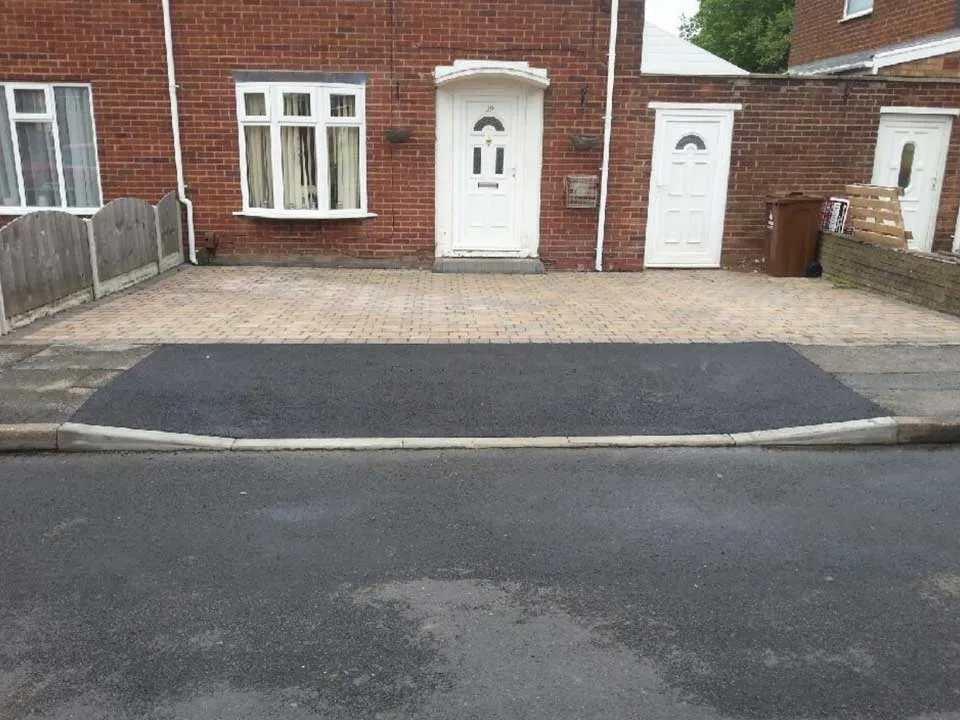
Anyone who’s lived through a proper Durham winter knows the weather here has a mind of its own. One week you’re scraping frost off the car at 7 am, the next you’re dodging puddles deep enough to lose a Wellington in. So when homeowners ring us up at Driveways Durham asking, Can you fit my dropped kerb next Tuesday? Our honest answer often depends on what the sky’s doing.
If you’re planning a dropped kerb installation in Durham, the weather isn’t just a minor inconvenience. It directly affects how long the job takes, how well the materials set, and whether the finished kerb will still look perfect five years from now. Let’s walk through exactly what the North East weather does to dropped kerb work — and the best way to plan around it.
Why Weather Matters More Than People Realise
A dropped kerb might look like a simple bit of concrete and tarmac. But underneath it’s a carefully built layered system. You’ve got excavation sub-base preparation and kerb setting. Surface reinstatement curing and almost every one of those stages is sensitive to temperature and moisture.
Get the weather wrong and you can end up with:
- Concrete that never properly cures
- Tarmac that won’t bond to the sub-base
- Kerbs that shift during freeze-thaw cycles
- Cracking, sinking, or surface pitting within months
Get it right and your dropped kerb will sit there doing its job quietly for 20+ years.
Four Weather Conditions That Affect Dropped Kerb Installation in Durham
Most people think rain is the only weather worry when installing a kerb. The truth? There are four very different conditions that affect the job — and skipping any of them is how driveways end up cracking within a year.
1. Cold Temperatures and Frost
This is the big one in our region. Concrete and mortar need a minimum ground temperature of around 5°C to cure properly. Below that, the chemical reaction that hardens the mix slows dramatically — and if temperatures drop below freezing before it’s fully set the water inside can freeze expand and weaken the entire structure.
We had a job in Belmont two winters ago where another contractor had laid a dropped kerb in late November with an overnight frost forecast. By February, the homeowner rang us to repair it — the concrete had crumbled at the edges, and the kerb had lifted. A proper job done in March would have lasted decades.
What we do at Driveways Durham in cold conditions:
- Monitor 5-day weather forecasts before scheduling
- Use frost blankets and insulated covers if temperatures dip unexpectedly
- Switch to rapid-set concrete mixes when needed (these tolerate slightly lower temperatures)
- Reschedule honestly when conditions genuinely won’t allow quality work
2. Heavy Rain and Wet Ground
Durham gets around 650–700mm of rainfall a year, and most of it seems to land on the days we’ve planned outdoor work. Heavy rain creates several problems:
- Excavated trenches fill with water: Making it impossible to compact the sub-base properly
- Fresh concrete gets diluted: If rain hits it before the initial set
- Tarmac won’t bond: To a wet surface — it just sits there refusing to grip
- Bedding mortar washes out: Leaving kerbs sitting on nothing
Light drizzle? Usually fine, especially once the surface has had its initial set. A genuine downpour mid-pour? That’s a reschedule, every time. Anyone who tells you otherwise is either inexperienced or cutting corners.
3. High Summer Heat (Yes, Really)
You might think summer is the dream window for dropped kerb installation in Durham — and most of the time, it is. But the heatwaves we’ve had over the last few years bring their own headaches:
- Concrete cures too quickly: Which sounds good, but actually leads to weaker bonds and surface cracking
- Tarmac becomes too soft to lay neatly: When ambient temperatures push past 25°C
- Workers need more frequent breaks: For safety, which extends the job timeline
For complete peace of mind, our team also carries out thorough Driveway and Kerb Safety Checks during every project to ensure long-lasting and council-compliant results.
4. Wind
People often forget about wind, but it speeds up surface drying on fresh concrete unevenly. The top dries before the inside has set which causes surface crazing — those fine, web-like cracks you sometimes see on poorly laid kerbs. A windbreak or hessian covering sorts it.
Best Time of Year for Dropped Kerb Installation in Durham
Based on years of doing this across County Durham here’s our honest ranking of the seasons:
Spring (March–May) — The Sweet Spot: Mild temperatures, manageable rainfall, and the ground starting to dry out from winter. Concrete cures properly, tarmac lays beautifully and you’re not battling extremes.
Early Autumn (September–October): Still warm enough for proper curing ground is still firm from summer and rainfall is manageable. A great backup if spring slots are gone.
Summer (June–August): Excellent in normal British summers. Trickier during heatwaves, but with proper technique, it’s a strong installation window. Just book early — everyone wants summer work done.
Winter (November–February): We do install in winter — but we’re selective. If there’s a stable, dry, mild spell forecast, it’s perfectly doable. If the long-range forecast looks frosty or stormy, we’ll recommend waiting.
What This Means for Your Project Timeline
Here’s something most homeowners don’t realise: a dropped kerb installation in Durham typically takes 1–3 working days for the physical work. But the full timeline — from booking to finished, drivable kerb — can stretch to 6–10 weeks because of:
- Durham County Council application processing (usually 4–6 weeks)
- Site survey and quotation
- Weather windows for the actual installation
- Concrete curing time (24–48 hours before light use, 7 days before vehicle weight)
If you want your kerb ready for a specific date — Christmas visitors, a new car arriving. Selling the house — apply at least two months ahead. More if you’re hoping for a spring slot.
Conclusion
A dropped kerb isn’t the kind of job you want to rush — or trust to whoever’s available on the day. The weather decides a lot of what we can and can’t do safely, and a good installer plans around it rather than ignoring it. At Driveways Durham, we’ve spent years learning the rhythm of the North East weather and working with it rather than against it. We’ll give you an honest timeline, handle the council application, and only lay your kerb when conditions will give you a finish that lasts decades — not months.
Frequently Asked Questions (FAQs)
Can you install a dropped kerb in winter in Durham?
Yes, in stable mild conditions. We monitor the forecast carefully and use cold-weather techniques where appropriate. We’ll never lay concrete or tarmac if conditions risk a poor finish.
Does rain delay a dropped kerb installation?
Light rain rarely causes a problem once the initial set is achieved. Heavy or sustained rain will delay the job — and that’s the right call. Cutting corners on wet ground leads to expensive failures.
How long does concrete take to cure for a dropped kerb?
Initial set: 24–48 hours (no foot traffic). Vehicle-ready: 5–7 days. Full strength: 28 days. We always advise on safe driving timelines for your specific install.
Do I need permission from Durham County Council?
Yes. Every dropped kerb in Durham requires a Section 184 application and council approval before work begins. We handle the paperwork for our customers as part of the service. You can read more on the Durham County Council website.
Will the weather affect the cost of my dropped kerb?
Not directly, but seasonal demand can. Spring and summer slots are more sought after. Booking off-peak (with the right weather window) sometimes brings better availability and pricing.


