
Driveway drainage is one of those issues most homeowners don’t think about until it becomes a problem. A puddle that never dries. Water is running across the pavement. A letter from the council asking questions you didn’t expect. By that point, what looked like a simple driveway upgrade can turn into a legal and financial headache.
In the UK, driveway drainage is regulated because it directly affects public safety, flood risk, and highway conditions. These rules apply whether your driveway was installed last month or twenty years ago. Understanding UK driveway drainage regulations helps homeowners avoid enforcement action, protect property value, and prevent long-term damage.
Why Driveway Drainage Is Regulated in the UK
Driveways are not isolated features. They connect private land to public spaces. When rainwater runs off a driveway onto the pavement or road, it increases slip risk, damages surfaces, and contributes to local flooding. This is why UK regulations focus so heavily on surface water control. The law is not concerned with how a driveway looks, but with where the water goes when it rains. If runoff affects the public highway, the homeowner is responsible. In areas like Durham, where rainfall is frequent, and streets are often narrow, poor drainage is noticed quickly and acted upon.
UK Driveway Drainage Regulations Explained Simply
The core rule is straightforward. Surface water from a driveway must not drain onto the public pavement or highway.
To meet this requirement, driveways must either:
- Be permeable, allowing water to soak into the ground
- Or direct water to a drainage system within the property boundary
This applies to new driveways and, in some cases, existing ones if changes are made. It also applies regardless of surface type. Block paving, resin, concrete, and tarmac are all subject to the same principle.
Ignoring this rule is one of the most common causes of non-compliance.
When Planning Permission Becomes an Issue
Driveway drainage is closely linked to planning permission.
You may need UK driveway planning permission if:
- Surface water drains onto the pavement or road
- A new access point or dropped kerb is being installed
- Ground levels are significantly altered
Even when planning permission is not required, drainage rules still apply. Homeowners often assume permitted development means no rules. In reality, drainage compliance exists independently of planning status. In Durham, driveway and drainage matters are overseen by Durham County Council, particularly where public pavements or kerbs are affected.
The Role of Permeable Driveways
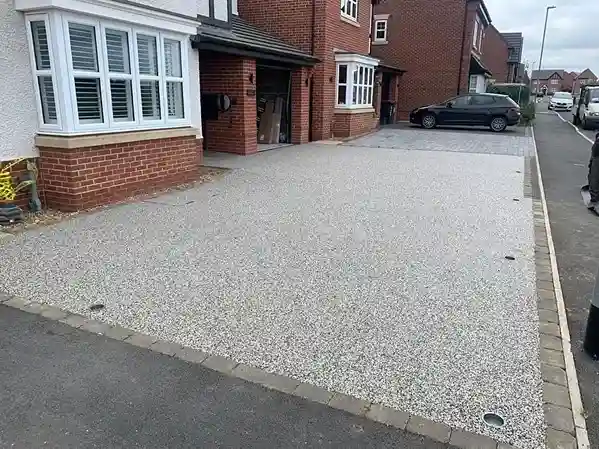
Permeable surfaces are one of the most common ways to comply with drainage regulations. These allow water to pass through the surface and soak into the ground below rather than running across it. Resin-bound driveways and permeable block paving systems are often used for this reason. However, permeability only works when the entire system is designed correctly. A permeable surface laid over a non-permeable base does not meet the intent of the regulations and can still cause runoff issues.
Kerb Installation Safety and Drainage
Kerbs are part of the public highway, and their design affects drainage. Poor kerb alignment or incorrect gradients can force water toward the pavement rather than away from it. This creates pooling, slip hazards, and accelerated pavement wear. Kerb installation safety standards exist to ensure water flows predictably and safely. A neat-looking kerb that channels water onto the pavement is still non-compliant, even if it looks professionally finished.
Incorrect Driveway Installation Risks Homeowners Face
Drainage failures rarely cause immediate problems. That is why they are often overlooked.
Common risks include:
- Water is pooling near the pavement edge
- Runoff freezing in winter and creating slip hazards
- Sub-base erosion beneath the driveway
- Pavement damage leading to council enforcement
In many cases, homeowners are required to carry out corrective work at their own expense. This can involve installing drainage channels, lifting and relaying sections, or even removing the driveway entirely.
These costs are almost always higher than doing the job correctly in the first place.
Driveway and Kerb Safety Checks Homeowners Should Do
While councils enforce regulations, homeowners remain responsible for ongoing safety.
Basic driveway and kerb safety checks include:
- Checking for standing water after rainfall
- Watching where water flows during heavy rain
- Inspecting kerb edges for damage or movement
- Noting changes in surface levels over time
If water consistently runs onto the pavement, the driveway is likely non-compliant, regardless of age.
Local Context: Drainage Challenges in Durham
Durham presents specific drainage challenges. Many residential streets are narrow, pavements are older, and ground conditions can be clay-heavy. These factors reduce natural drainage and increase runoff risk. As a result, councils are more vigilant about driveway drainage in this area. What might be tolerated elsewhere is more likely to be flagged in Durham. At Driveways Durham, we frequently assess driveways where drainage issues only became visible years after installation. In most cases, the original design did not account for local conditions.
How Professional Installation Supports Compliance
Professional installers do more than lay surfaces. They design drainage. This includes assessing ground conditions, choosing appropriate materials, setting correct gradients, and ensuring water is managed within the property boundary. These steps are not optional extras. They are what make a driveway legally compliant. Professional planning also protects homeowners if questions arise later. Clear documentation and compliant design reduce the risk of disputes or enforcement.
How Drainage Compliance Protects Property Value
Drainage issues are increasingly flagged during property sales. Surveyors and solicitors often ask whether driveways comply with current regulations, especially if runoff affects public areas. Non-compliance can delay sales, reduce buyer confidence, or lead to last-minute repair demands. Compliant drainage is not just about avoiding fines. It protects the future saleability of the property.
Final Thoughts
UK driveway drainage regulations exist to manage real risks, not to complicate home improvements. They protect pedestrians, prevent flooding, and preserve public infrastructure. For homeowners in Durham, understanding and complying with these rules is essential. Drainage problems rarely fix themselves, and councils are not becoming more lenient over time.
If you are planning a new driveway or are unsure whether your existing one is compliant, addressing drainage early is the safest and most cost-effective approach. If you need clear advice on driveway drainage compliance in Durham, speak to Driveways Durham. We focus on safe, approved solutions that protect your property long after installation is complete.
Frequently Asked Questions (FAQs)
What are UK driveway drainage regulations?
UK driveway drainage regulations require that surface water from a driveway must drain within the property boundary and not flow onto the public pavement or road. This rule applies to all driveway surfaces.
Do I need planning permission for driveway drainage in the UK?
Planning permission may be required if the driveway water drains onto the public highway or if ground levels are altered significantly. Drainage rules still apply even when planning permission is not needed.
Who is responsible for driveway drainage compliance?
The homeowner is legally responsible for ensuring their driveway drainage complies with UK regulations. In Durham, enforcement is handled by Durham County Council.
Does law require permeable driveways in the UK?
Permeable driveways are not always mandatory, but they are one of the easiest ways to comply with drainage regulations. Non-permeable driveways must include approved drainage solutions within the property.
What happens if driveway water runs onto the pavement?
If driveway water runs onto the pavement or road, the council may issue an enforcement notice requiring corrective work. Homeowners may have to install drainage channels or re-lay the driveway at their own cost.
Do driveway drainage rules apply to existing driveways?
Yes. While older driveways may not be immediately enforced, any changes, complaints, or safety issues can trigger council action, even if the driveway was installed years ago.
How can I check if my driveway drainage is compliant?
Check where water flows during heavy rain. If water consistently runs onto the pavement or road, the driveway is likely non-compliant. A professional assessment can confirm this.


