
Here’s a question we get asked almost every week at Driveways Durham: If I spend the extra on resin, how long will it actually last? It’s a fair thing to want to know. Driveways are a serious investment — easily four or five figures — and nobody wants to be ripping one up again in seven or eight years.
The good news? When done properly, resin is one of the longest-lasting driveway surfaces you can choose. The honest news? Doing a lot of heavy lifting in that sentence. Let’s walk through exactly how long resin bound surfaces in Durham typically last, what makes them last longer (or fail early), and how to get the most out of yours.
The Secret to a 25+ Year Resin Bound Surface
Most quality-installed resin bound surfaces in the UK last between 15 and 25 years. Some go beyond 25 with the right care; some unfortunately fail within five if they were poorly laid in the first place. That’s a huge range — and the difference comes down almost entirely to two things: installation quality and maintenance habits. Get both right, and you’re looking at a driveway that’ll outlast the car parked on it several times over.
What Actually Affects How Long Resin Bound Surfaces Last?
The durability of a resin bound surface is largely determined by the quality of its installation and the materials used. Regular maintenance also plays a vital role in keeping it strong, attractive, and long-lasting.
1. The Sub-Base Beneath the Surface
This is the bit nobody sees, and it’s the bit that decides everything. Beneath your beautiful resin finish sits a layered sub-base — typically MOT Type 1 aggregate for non-permeable installs, or open-graded stone for permeable ones. If that foundation isn’t deep enough, compacted properly, or built for the load it’ll carry, the resin on top has no chance of lasting its full lifespan. We get called out a few times a year to look at failed resin drives, and nine times out of ten the resin itself is fine. It’s the foundation underneath that’s collapsed or shifted, taking the surface with it.
2. Installation Quality
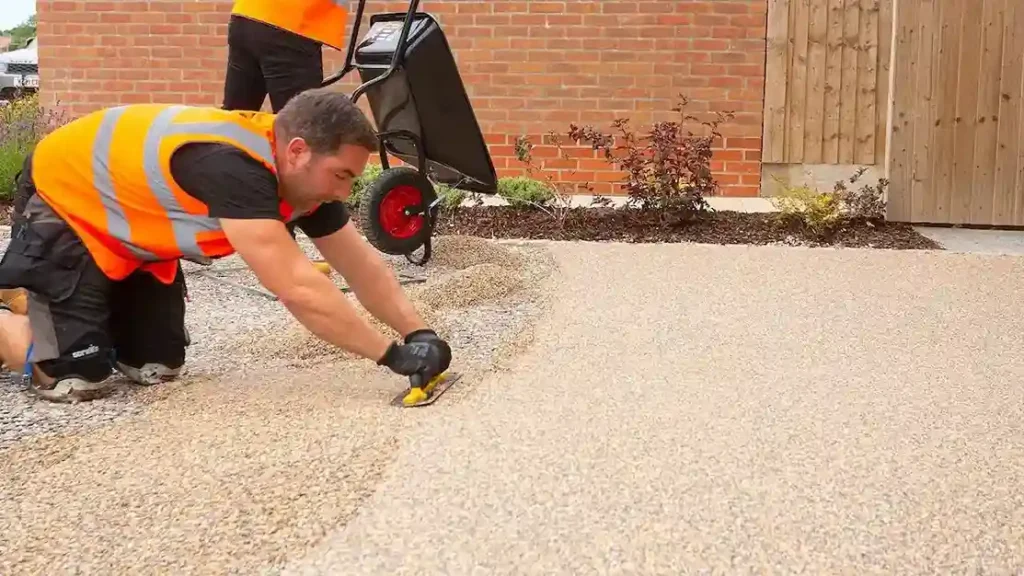
A resin bound surface is a hand-laid, trowel-applied finish — and trowel skill matters. Mix ratios, working time, temperature on the day, and aggregate distribution all affect how the surface bonds and wears. A team that’s been laying resin for a decade can spot and fix issues in real time. A team that’s done two jobs from a YouTube tutorial? Different story. This is one reason we always tell Durham homeowners: ask how many resin jobs your installer has completed in the last 12 months. It’s a fair question, and any decent contractor will be glad to answer.
3. UV Stability of the Resin
Cheap resin yellows in sunlight. Quality resin doesn’t. UV-stable resin is what keeps your driveway looking the same colour in year 20 as it did on day one. If you’re getting quotes that seem suspiciously low, the resin grade is often where corners are being cut. Always ask whether the resin used is UV-stable — it’s a non-negotiable for North East installs where every bit of summer sun counts.
4. The Aggregate Choice
Natural stones like marble and granite are extremely hard-wearing. Some recycled aggregates work brilliantly, others are softer and don’t hold up as well under tyre pressure. A good installer will guide you toward an aggregate blend that suits your usage — daily school run, multiple cars, occasional visitors — not just the one with the prettiest catalogue photo.
5. The Durham Weather
Our North East climate is genuinely tough on outdoor surfaces. Wet winters, the odd hard frost, freeze-thaw cycles, and the occasional summer heatwave all put resin to the test.b The brilliant news: properly installed resin bound surfaces in Durham handle it all very well. They’re frost-resistant, don’t crack under freeze-thaw expansion the way concrete can, and the permeable versions drain rainwater straight through — so water never has the chance to sit, freeze, and damage the surface.
6. How You Use It
Common sense matters here. A resin drive carrying two family cars will last longer than one that doubles as a workshop floor or has a horse trailer reversed onto it every weekend. Heavy point loads (jack stands, skip corners) can damage even a great install if they’re left in one spot too long.
Real Lifespan in the Real World
A resin patio we laid in Brandon eight years ago still looks almost identical to the photos we took on completion day. A resin drive in Pity Me from around the same time has carried two cars in and out daily — and apart from one annual jet wash, it’s had no real maintenance and shows it on no visible wear. These aren’t outliers. They’re what happens when a permeable sub-base is built right, UV-stable resin is used, and the homeowner gives the surface a quick rinse once or twice a year.
How to Make Your Resin Driveway Last 25+ Years
Here’s the honest list — no faff, just what works:
- Choose your installer carefully: Experience matters more than the lowest price
- Insist on UV-stable resin: It’s the difference between a 10-year and a 25-year surface
- Jet wash once or twice a year: Keeps debris, moss spores, and dirt out of the surface
- Avoid harsh chemicals: Soap and water, or a dedicated resin-safe cleaner, is plenty
- Don’t drag heavy metal objects: Skips, bins, jack stands; lift, don’t drag
- Address spills quickly: Oil and fuel can stain if left
- Get small issues fixed early: Resin can be patched neatly if you catch it in time
Compared to other surfaces, you can read more about block paving lifespan and care on our blog if you’re still weighing options.
Get a Long-Lasting Resin Driveway with Driveways Durham
At Driveways Durham, resin bound surfacing is one of our core specialities — and we install it the right way every time. Proper sub-base, UV-stable resin, quality aggregates, and the kind of finish that still looks great two decades on. If you want a driveway built to last, not just one that looks good in week one, we’d love to come and have a look. How long will a resin bound driveway last in Durham? Properly installed and looked after, easily 20 years — often more. The lifespan isn’t really about resin as a material; it’s about whether the people laying it know what they’re doing, and whether you give it the light care it needs.
Frequently Asked Questions (FAQs)
How long do resin bound surfaces last in the UK?
A good-quality install lasts 15–25 years on average, with many going beyond 25 with proper care.
Do resin bound surfaces fade over time?
Quality UV-stable resin keeps its colour for decades. Cheap resin can yellow within a few years — the resin grade matters more than people realise.
Do resin driveways crack?
Properly installed, no — resin is flexible enough to handle freeze-thaw cycles. Cracking usually points to sub-base failure, not the resin itself.
How often do resin bound surfaces need maintenance?
A jet wash once or twice a year and occasional spot cleaning is usually all you need. There’s no resealing required like with block paving.
Can resin bound surfaces be repaired if damaged?
Yes — damaged areas can be cut out and re-laid by a skilled installer. The repair often blends seamlessly into the surrounding surface.


