
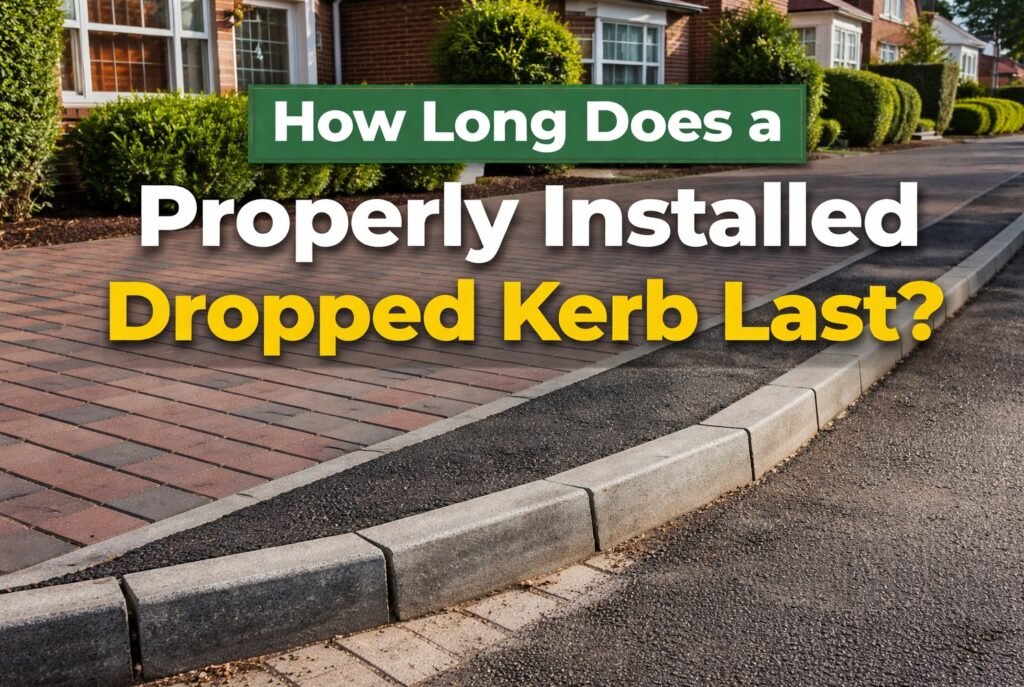
Most people only think about the lifespan of a dropped kerb when something goes wrong. A crack appears. The kerb starts to dip. Or worse, the council raises an issue just when you thought the job was long forgotten. Here’s the truth. A Dropped Krb Installation in Durham can last decades, or it can become a problem far sooner than expected. I’ve seen both outcomes across Durham, sometimes just a few houses apart. The difference is not age or weather. It’s whether the dropped kerb was installed properly from day one.
What Is the Expected Lifespan of a Properly Installed Dropped Kerb?
A properly installed dropped kerb should last 20 to 30 years without the need for major repairs.
That estimate assumes the installation:
- Meets current dropped kerb standards that UK councils enforce
- Uses approved materials
- Has the correct sub-base depth and compaction
- Manages surface water properly
- Is used for normal residential access
When kerbs fail earlier than this, it’s rarely because the materials were poor. It’s almost always because the groundwork underneath was rushed or cut back.
What Properly Installed Actually Means
This is where many homeowners get caught out. Proper installation is not a vague term. Councils and highway authorities are very specific.
A safe dropped kerb installation typically involves:
- Excavation to around 250–300mm
- A Type 1 MOT sub-base, compacted in layers
- Kerb units rated for vehicle load
- Solid restraints to stop sideways movement
- Smooth transitions between road, pavement, and driveway
- Drainage measures to prevent water pooling beneath the kerb
I’ve lifted failed kerbs that looked neat on the surface but were sitting on loose sand underneath. They never had a realistic lifespan to begin with.
Materials and Their Role in Dropped Kerb Lifespan
Materials matter, but they’re only part of the story.
Common materials used for dropped kerb installations:
- Precast concrete kerbs
The most common option. When installed correctly, they last 20–30 years. - Granite kerbs
Extremely durable and long-lasting, often exceeding 40 years, but usually unnecessary for residential driveways. - Reclaimed kerbs
Cheaper upfront, but inconsistent in strength and more likely to be rejected by councils.
Even the strongest kerb will fail early if it’s not supported properly. Longevity is built below ground, not on the surface.
Dropped Kerb Standards UK Homeowners Should Know About
In Durham, dropped kerb installations must meet highway authority requirements, not just look tidy.
Councils assess:
- Pedestrian safety and accessibility
- Vehicle visibility near junctions
- Pavement gradients and levels
- Drainage and surface water runoff
- Long-term durability under vehicle load
This is where confusion often arises around dropped kerb planning permission. In many cases, planning permission isn’t required, but a licence from the council almost always is. Installing a kerb without approval can shorten its lifespan to zero if you’re forced to remove it.
How Usage and Traffic Load Affect Longevity
One factor many guides overlook is how the kerb is actually used.
A dropped kerb serving:
- One small car
- Occasional access
Will experience far less stress than one used daily:
- Vans
- 4×4 vehicles
- Cars turning sharply across the kerb edge
I’ve seen kerbs fail early simply because usage changed. A homeowner upgraded to a heavier vehicle, and the kerb was never built to handle the extra load. Cracks and movement followed within a few years.
Building for future use is just as important as building for today.
Drainage: The Quiet Cause of Early Failure
If there’s one issue that consistently shortens a dropped kerb’s lifespan, it’s poor drainage. Water slowly washes away fine material from the sub-base. Over time, voids form. Eventually, the kerb starts to settle or crack.
Common drainage problems include:
- Driveways sloping toward the pavement
- Non-permeable surfaces with no runoff control
- Blocked or missing soakaways
Once water undermines the base, even a well-laid kerb will struggle to last its full lifespan.
The Real Benefits of a Properly Installed Dropped Kerb
When installed correctly, the benefits go beyond appearance.
Key dropped kerb benefits include:
- Safer vehicle access without mounting pavements
- Improved pedestrian safety
- Compliance with accessibility standards
- Reduced risk of council enforcement
- Long-term durability with minimal maintenance
A good dropped kerb is one you stop noticing because it simply works year after year.
Maintenance and Its Impact on Lifespan
A dropped kerb doesn’t require constant maintenance, but it isn’t completely maintenance-free either.
Simple actions that help extend lifespan:
- Keeping drainage points clear
- Cleaning oil or fuel spills near the kerb edge
- Repairing adjacent driveway damage promptly
Neglecting small issues can allow water ingress and accelerate wear beneath the surface.
Common Reasons Dropped Kerbs Fail Early
- Poor Sub-Base Preparation: Insufficient depth or poor compaction leads to settlement often within five years.
- Lack of Edge Restraints: Without proper restraints, kerbs can spread sideways under vehicle load.
- Non-Compliant Installation: Unapproved work may be removed regardless of condition.
These failures are predictable and almost always preventable.
Real-World Examples from Durham
- Over 25 years old
Installed with a deep sub-base and good drainage. Still compliant with minor cosmetic wear. - Failed after 8 years
Cheap installation with no proper restraints. Visible movement and council issues. - Extended lifespan
Early drainage correction added an estimated 10–15 years of service.
Longevity follows patterns. It’s rarely random.
Why Professional Installation Makes a Difference
Professional installers understand:
- Local authority requirements
- Common reasons applications are rejected
- Soil conditions and drainage challenges in Durham
- How to balance safety, access, and durability
At Driveways Durham, we’ve seen how shortcuts taken early almost always lead to higher costs later. A professional approach isn’t about perfection. It’s about getting the fundamentals right.
How Long Should You Expect Yours to Last?
If your dropped kerb is:
- Installed to current standards
- Approved by the council
- Built with the correct materials
- Properly drained
You should expect 20 to 30 years of reliable service.
If it doesn’t last that long, something went wrong early in the process.
Final Thoughts
A dropped kerb is not just a cosmetic upgrade. It’s a structural part of your property’s access and a permanent change to the public highway. When installed properly, it quietly does its job for decades. When installed badly, it becomes a recurring problem that never quite goes away. 01913 004087 If you’re planning a dropped kerb or want an honest assessment of an existing one in Durham, speak to Driveways Durham. We focus on safe installation, long-term durability, and full compliance, not short-term fixes.
Frequently Asked Questions (FAQs)
How long does a properly installed dropped kerb last?
A properly installed dropped kerb typically lasts 20 to 30 years. Its lifespan depends on correct groundwork, council-approved materials, proper drainage, and normal residential vehicle use.
What shortens the lifespan of a dropped kerb?
The most common causes of early failure are poor sub-base preparation, inadequate drainage, lack of edge restraints, and unapproved installation. Heavy vehicle use can also reduce lifespan if the kerb wasn’t built for it.
Do dropped kerb standards in the UK affect durability?
Yes. Dropped kerb standards in the UK are designed to ensure long-term safety and strength. Kerbs that don’t meet council and highway authority specifications are more likely to fail early or be rejected.
Is planning permission required for a dropped kerb in Durham?
In many cases, planning permission isn’t required, but you almost always need approval or a licence from Durham’s highway authority. Installing a dropped kerb without permission can result in enforced removal.
Can a dropped kerb be repaired instead of replaced?
Minor issues like small cracks or drainage problems can sometimes be repaired. However, if the sub-base has failed or the installation is non-compliant, full replacement is usually the only long-term solution.
Does professional installation really make a difference?
Yes. Professional dropped kerb installation in Durham ensures correct depth, compaction, drainage, and compliance with local standards, which significantly increases lifespan and reduces the risk of costly future issues.
How can I extend the lifespan of my dropped kerb?
Keep drainage areas clear, avoid oil build-up near the kerb edge, and repair adjacent driveway damage early. Small maintenance steps help prevent water ingress and sub-base movement.


