
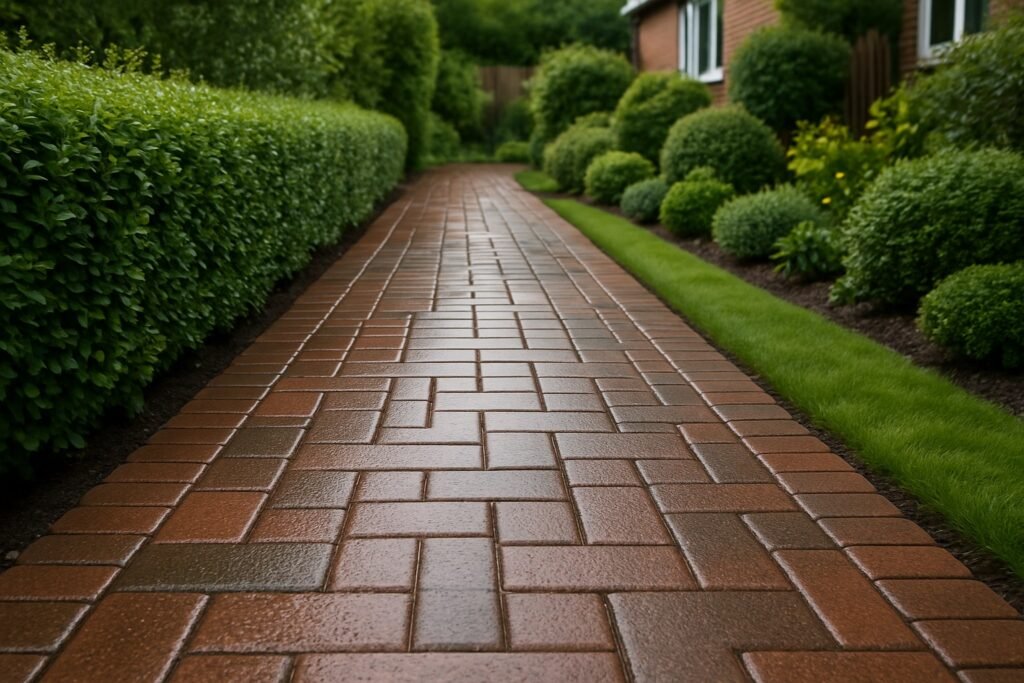
Garden paths add structure, style, and safety to outdoor spaces — but in Durham’s damp, unpredictable weather, they face far more pressure than many homeowners realise. Constant rain encourages moss, frost worsens cracks, and everyday foot traffic slowly wears surfaces down. Without regular care, even a well-laid Patio and Garden Path can start showing signs of damage far earlier than expected.
At Driveways Durham, we maintain and restore garden paths across County Durham, and the same pattern appears repeatedly: a few simple maintenance habits can extend a path’s lifespan by years. With the right approach, you avoid costly repairs, keep your garden looking its best, and maintain a safe surface all year round.
Why Garden Path Maintenance Matters in Durham
Durham’s climate is a major factor behind premature garden path deterioration. You’ll notice issues developing more quickly due to:
- Frequent rainfall, which increases moss and algae growth
- Frost and freeze-thaw cycles, which widen cracks
- Water pooling, especially on uneven paths
- Dirt build-up in joints, encouraging weeds
- General wear, particularly on block paving and resin paths
Ignoring these signs leads to bigger structural issues, unsafe surfaces, and expensive repairs later on.
Regular Cleaning: The Foundation of Longer-Lasting Paths
Cleaning garden paths is one of the most important maintenance habits. In Durham’s wet conditions, algae, mud, and lichen appear quickly.
Cleaning helps by:
- Removing slippery growth that creates hazards
- Preventing grime from eating into the surface
- Reducing weed growth in joints
- Keeping colours bright and materials healthy
Most materials don’t need heavy pressure washing. A soft wash or gentle clean at regular intervals protects the structure and appearance.
Spotting Early Signs of Path Damage
Garden path problems rarely arrive suddenly; they grow slowly. Regular inspections help you catch small faults before they become expensive issues.
Look out for:
- Tiny cracks, especially after winter
- Loose or uneven slabs
- Fading or discolouration
- Stubborn algae patches
- Pooling water after rain
- Sinking edges
These are early indicators that your path needs attention. Fixing issues early makes repairs cheaper and long-lasting.
Drainage: The Hidden Factor Behind Path Lifespan
Durham’s rainfall means moisture control is essential. Poor drainage weakens materials and accelerates deterioration.
Good drainage includes:
- Ensuring the path slopes correctly
- Clearing debris from drainage channels
- Keeping joints clean to help water flow
- Fixing dips or sunken areas that trap water
When water drains properly, you reduce cracking, moss growth, and frost-related damage.
Seasonal Garden Path Maintenance in Durham
Each season affects outdoor paths differently. Simple seasonal habits help extend the lifespan significantly.
Spring:
- Clean dirt and algae from winter
- Inspect for frost damage
- Refill the missing joint sand
Summer:
- Seal block paving and stone paths
- Repair cracks or surface wear
- Refresh resin surfaces if needed
Autumn:
- Remove leaves before they trap moisture
- Clear blocked drainage routes
- Check edges for movement
Winter:
- Prevent ice build-up
- Keep the surface clear after heavy rain or snow
- Avoid using harsh chemicals that damage paving
This seasonal cycle keeps your paths safe, strong, and visually appealing all year.
Sealing Garden Paths for Extra Protection
Sealing is an effective way to extend the life of Block Paving, concrete, and stone paths — especially in wet climates like Durham.
A good sealant helps by:
- Blocking moisture absorption
- Reducing weed growth
- Preventing stains
- Protecting colour
- Strengthening the upper surface
Once a path is sealed, it stays cleaner and more durable for much longer.
Weed Control to Prevent Structural Problems
Weeds don’t just spoil the appearance of a garden path — they also cause long-term damage.
Weeds create problems by:
- Forcing joints apart
- Lifting slabs or blocks
- Trapping moisture
- Creating an uneven footing
Regular weed removal, joint re-sanding, and resin jointing are simple ways to prevent structural issues.
Professional Maintenance Saves Money Over Time
While homeowners can easily manage basic cleaning and weed control, professional garden path maintenance becomes essential when:
- Slabs are lifting
- Resin areas have worn down
- Drainage issues keep returning
- Path surfaces are severely stained
- Edges are collapsing
Professionals like Driveways Durham use the right methods and materials to extend the lifespan of your garden paths safely and affordably.
You save money long-term because problems are handled before they escalate.
Final Thoughts
Proper garden path maintenance in Durham is not complicated — it’s about consistency. Cleaning, seasonal checks, weed control, sealing, and drainage care all contribute to long-lasting, safe, attractive outdoor areas. Whether your paths are made of block paving, resin, stone, or concrete, Driveways Durham can help you maintain them with expert care and attention to detail, 01913 004087. A little maintenance now prevents major repairs later keeping your garden paths strong, safe and looking their best.
Frequently Asked Questions (FAQs)
How often should I clean my garden path in Durham?
Because Durham has frequent rain and moisture, cleaning every three to four months is ideal. This helps remove algae, moss, and dirt before they cause slippery surfaces or long-term damage. High-traffic paths may need light cleaning more often.
What is the best way to prevent weeds from growing between paving?
Keeping joints filled with quality jointing sand or resin reduces weed growth significantly. Regular sweeping, seasonal weed removal, and sealing also prevent weed roots from penetrating gaps and lifting slabs.
Does sealing a garden path really make a difference?
Yes. Sealing protects paving from moisture, stains, colour fading, and frost damage. In Durham’s wet climate, a sealant adds years to the lifespan of block paving, stone paths, and concrete surfaces.
How do I stop my garden path from becoming slippery?
Slippery paths are usually caused by algae and moss. A soft wash, regular cleaning, and improving drainage help prevent slippery surfaces. Sealing the path also reduces moisture absorption, which slows regrowth.
What signs show that my path needs repairs?
Look for cracks, uneven slabs, sinking edges, water pooling, and persistent discolouration. These early issues get worse quickly if ignored, especially in colder months. Fixing them early keeps your path stable and safe.


