
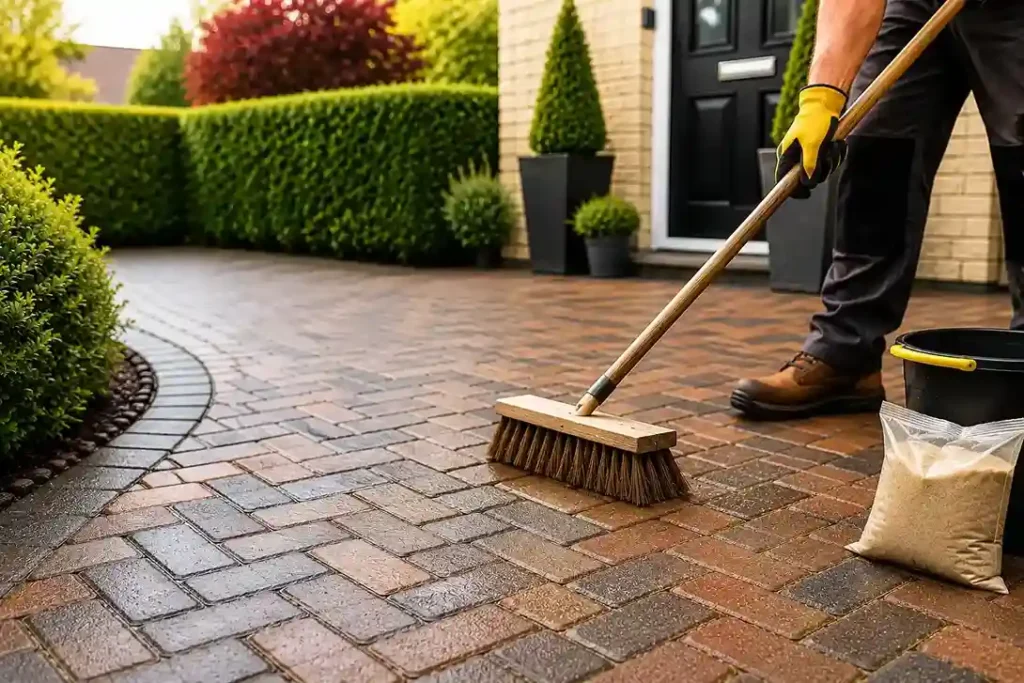
Block paving should be inspected throughout the year and given a thorough clean at least once annually. However, the right maintenance schedule depends on the driveway’s condition, surrounding trees, vehicle use, drainage and exposure to shade. For homeowners researching block paving maintenance in Durham, the most important point is that small, regular tasks are usually more effective than waiting until the surface becomes heavily stained, uneven or covered in weeds. Weeping away leaves, removing new weeds and checking the joints can prevent minor issues from becoming expensive repairs. After pressure washing, any jointing sand that has been removed should also be replaced to help keep the paving blocks stable.
How Often Does Block Paving Need Maintenance?
A block paved driveway does not normally require intensive attention every month. However, it should be checked regularly so that dirt, weeds, drainage problems and movement can be identified early.
| Maintenance task | Recommended frequency |
|---|---|
| Sweep away leaves and loose debris | Every few weeks or when required |
| Remove weeds and moss | As soon as they appear |
| Check paving joints | Every three to six months |
| Inspect for sinking or movement | At least twice a year |
| Complete a thorough clean | Once or twice a year |
| Check drainage channels | Before autumn and after heavy rainfall |
| Reapply kiln-dried jointing sand | When joints become low or after pressure washing |
| Consider sealing | According to the paving and sealant manufacturer’s guidance |
This schedule is only a general guide. A shaded driveway beneath trees may need more frequent cleaning than an open driveway exposed to sunlight and regular vehicle movement.
Why Is Regular Block Paving Maintenance Important in Durham?
Durham’s changing seasonal conditions can expose driveways to rainfall, fallen leaves, frost, moisture and periods of limited sunlight. These conditions may encourage dirt, moss and organic material to collect on the surface.
Regular maintenance helps protect:
- The appearance of the driveway
- The stability of the paving joints
- Surface drainage
- Pedestrian grip and safety
- The alignment of individual blocks
- The condition of the edges and drainage channels
Neglected block paving does not necessarily fail immediately. Problems often develop gradually. Jointing sand may disappear, weeds may establish themselves, blocks may loosen, and water may begin collecting in low areas. Addressing these signs early is generally easier than lifting and relaying a larger section of the driveway.
Sweep the Driveway Regularly
Routine sweeping is one of the simplest parts of effective block paving maintenance. Leaves, soil and other organic debris can collect in paving joints. If this material remains damp, it can provide suitable conditions for weeds, moss and algae.
Use a stiff outdoor broom to remove:
- Fallen leaves
- Soil and garden debris
- Loose moss
- Small stones
- Litter
- Mud deposited by vehicles
Sweeping is particularly useful during autumn when leaves can accumulate quickly. It is also worth checking areas beside walls, fences, planting beds and parked vehicles, as these sections may receive less sunlight and airflow.
How Often Should Block Paving Be Cleaned?
Most residential block paving benefits from a thorough clean once or twice a year. Spring is often a suitable time to remove winter dirt, while an autumn clean can prepare the surface for colder and wetter conditions.
Additional cleaning may be needed when the driveway develops:
- Oil or fuel marks
- Tyre marks
- Moss or algae
- Bird droppings
- Mud stains
- Food or drink spills
- Heavy surface discolouration
For light dirt, warm water, a suitable mild detergent and a stiff brush may be sufficient. Specialist paving products can be used for more stubborn marks, but they must be appropriate for the paving material. Always follow the product manufacturer’s instructions. Strong or unsuitable chemicals can discolour or damage some paving products.
Can You Pressure Wash Block Paving?
Block paving can usually be pressure washed, but the equipment must be used carefully. Excessive pressure can mark the blocks and remove too much sand from the joints. Marshalls recommends using medium pressure and directing the spray diagonally rather than directly along the paving joints.
Before pressure washing:
- Sweep away loose dirt and stones.
- Remove vehicles, plant pots and outdoor furniture.
- Test the pressure on a small, less visible area.
- Keep the nozzle moving rather than concentrating on one block.
- Avoid directing water continuously into the joints.
- Allow the surface to dry before assessing the jointing sand.
Pressure washing should not be treated as a substitute for repairs. If blocks are already loose, cracked or badly sunken, have the area inspected before using powerful cleaning equipment.
Why Does Block Paving Need Re-Sanding?
Kiln-dried sand fills the narrow joints between paving blocks. It helps the individual blocks work together and remain stable under vehicles and foot traffic.
Over time, jointing sand can be disturbed by:
- Pressure washing
- Heavy rainfall
- Repeated sweeping
- Weed removal
- Vehicle movement
- Poor drainage
- General weather exposure
Marshalls advises replacing jointing sand removed during pressure washing before substantial traffic uses the driveway again. Before re-sanding, the driveway and joints must be clean and completely dry. Damp conditions can prevent kiln-dried sand from flowing properly into the joints.
The sand should be spread across the surface and brushed into the gaps with a dry broom. Any excess can then be swept away. If the sand repeatedly disappears from the same area, there may be another problem, such as poor drainage, unstable blocks or excessive water flow. Simply adding more sand may not provide a lasting solution.
How Often Should Block Paving Be Re-Sanded?
There is no fixed schedule that suits every driveway. The joints should be checked several times a year and topped up whenever the sand level becomes noticeably low.
Re-sanding is particularly important:
- After pressure washing
- Following weed removal from the joints
- When blocks begin to feel loose
- After prolonged periods of heavy rainfall
- When gaps appear between blocks
- Following repairs or localised relaying
Jointing sand should not be confused with the coarser laying material beneath the blocks. Use a jointing product intended for the specific block paving system.
Should Block Paving Be Sealed?
Sealing is optional for many block paved driveways. A suitable sealant may help reduce staining, stabilise jointing sand and make routine cleaning easier. It may also enhance the colour of certain paving products. However, sealant should not be applied automatically.
Before sealing, consider:
- The type and age of the paving
- Whether the surface is completely clean and dry
- Existing stains or efflorescence
- Drainage requirements
- Whether the blocks are permeable
- The finish created by the sealant
- Manufacturer recommendations
Applying the wrong product or sealing a damp, dirty surface can create an uneven or unattractive finish. Permeable block paving requires particular care because an unsuitable treatment may interfere with its drainage performance. Professional advice is sensible when the paving type or previous treatment is unknown.
How Should Weeds Be Removed From Block Paving?
Weeds commonly establish themselves in organic matter that has collected within the joints. They do not always grow upwards through the entire driveway construction. Small weeds can often be removed manually or with an appropriate paving-joint tool. Try to remove the roots without taking out excessive amounts of sand.
After weed removal:
- Sweep away loose material.
- Clean the affected joints.
- Allow the area to dry.
- Replace missing kiln-dried sand.
- Continue regular sweeping to reduce new growth.
Marshalls notes that partially filled or empty joints can be detrimental to paving performance, so sand removed with weeds should be replaced promptly. Weedkiller may be suitable in some situations, but it should be used carefully and according to the manufacturer’s directions. Consider nearby lawns, borders, pets and surface-water drains before applying any chemical treatment.
What Are the Signs That Block Paving Needs Professional Attention?
Cleaning and re-sanding can handle routine maintenance, but structural problems may require an experienced block paving contractor.
Arrange an inspection when you notice:
- Blocks sinking in one area
- Repeated water pooling
- Loose or rocking blocks
- Collapsing driveway edges
- Deep wheel depressions
- Drainage channels moving or overflowing
- Large gaps between blocks
- Widespread surface movement
- Cracked blocks appearing repeatedly
- Sand washing out soon after replacement
Sunken paving may indicate a problem with the laying course, sub-base, drainage or ground beneath the driveway. Filling the low area with sand from above will not correct the underlying cause. One advantage of block paving is that individual sections can often be lifted and relaid without replacing the entire driveway. Early repairs can therefore limit disruption and help preserve the surrounding surface.
Is DIY Block Paving Maintenance Suitable?
Homeowners can usually handle simple tasks such as sweeping, light cleaning, weed removal and checking drainage channels.
Professional help may be more appropriate when:
- Heavy staining requires specialist treatment
- Large areas need pressure washing
- Blocks have become uneven
- The driveway has drainage problems
- Jointing sand disappears repeatedly
- Edges have started moving
- The paving has previously been sealed
- The material requires specialist cleaning products
A professional assessment can distinguish between a surface maintenance issue and a construction problem. This helps avoid spending money on cleaning or sealing when repairs are actually required.
Seasonal Block Paving Maintenance Checklist
Spring: Remove winter debris, inspect the surface for frost-related movement and complete a thorough clean if required. Check the joints after cleaning and replace missing sand.
Summer: Treat stains promptly and monitor dry joints. Dry summer conditions are often more suitable for re-sanding because kiln-dried sand flows best when both the paving and weather are dry.
Autumn: Sweep fallen leaves regularly and clear nearby drainage channels. Organic debris should not be allowed to remain wet on the driveway for long periods.
Winter: Keep the surface clear of slippery debris and inspect areas where water collects. Avoid using sharp tools that could chip the blocks when removing ice or compacted snow.
Arrange Block Paving Maintenance in Durham
Consistent maintenance can help a block paved driveway remain clean, stable and practical. The key is to act before weeds, lost jointing sand, poor drainage or surface movement become established problems. Driveways Durham can assess existing paving, identify areas requiring attention and recommend suitable cleaning, re-sanding or repair work. We also provide professional Block Paving Durham services for homeowners planning a new driveway or replacing a worn surface. Contact Driveways Durham to request an assessment and discuss the condition of your block paved driveway.
Frequently Asked Questions
Does block paving need annual maintenance?
Yes. Most block paved driveways should receive at least one thorough inspection and clean each year. Sweeping, weed removal and minor checks should be completed more regularly.
How often should block paving be pressure washed?
Pressure washing should be carried out only when the surface needs a deeper clean. Using it too frequently or at excessive pressure can remove jointing sand and potentially mark the paving.
Do I need to re-sand after pressure washing?
Yes, when pressure washing has removed sand from the joints. Allow the paving to dry fully before brushing suitable kiln-dried sand into the gaps.
Why do weeds keep returning between the blocks?
Weeds can return when soil, seeds and organic debris settle inside the joints. Regular sweeping, careful weed removal and keeping joints properly filled can reduce recurrence.
Can block paving be repaired without replacing the whole driveway?
In many cases, yes. Damaged or sunken sections can often be lifted, the underlying problem corrected and the original blocks relaid.
When is the best time to maintain block paving?
Spring and early autumn are useful times for general maintenance. Re-sanding and sealing should be completed during suitable dry weather and in accordance with product instructions.


