
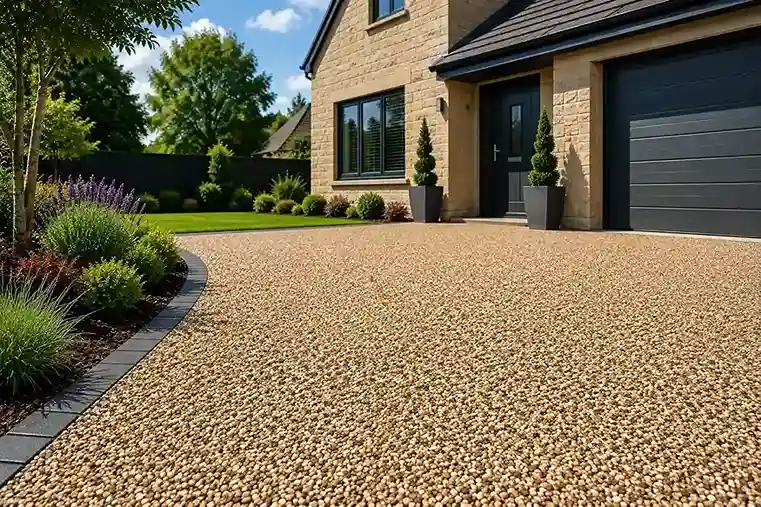
Resin bound surfacing for driveways is created by thoroughly mixing natural aggregate with a resin binder before the mixture is spread and hand-trowelled over a suitably prepared base. The result is a smooth, decorative surface in which the stones are held firmly together rather than remaining loose. For homeowners in Durham, resin bound paving can provide a practical alternative to traditional block paving, gravel, concrete or tarmac. Its appearance is highly customisable, and a correctly designed permeable system can also help manage rainwater within the property rather than simply directing surface water towards the highway. However, the finished resin layer is only one part of a driveway. Base preparation, drainage, edging, installation conditions and the choice of resin and aggregate all influence how the surface performs.
How Does Resin Bound Surfacing Work?
The important distinction is in the word bound. With a resin-bound system, clean, dry aggregate is mixed with a measured quantity of resin so that the stones are coated before installation. The material is then laid over the prepared base and trowelled to create an even surface. This differs from resin-bonded surfacing, where resin is applied to the base first, and aggregate is scattered over the top. Resin-bonded finishes tend to have a rougher texture and are generally impermeable, whereas resin-bound systems can form a permeable surface when the complete construction beneath them is designed to allow water through. PavingExpert also distinguishes resin-bound systems as mixed-and-trowelled surfaces, while bonded systems use aggregate scattered onto resin. That distinction matters when comparing driveway options because the two systems should not be treated as interchangeable.
What Is a Resin Bound Driveway Made From?
A typical resin bound driveway uses a combination of kiln-dried natural aggregate and a two-part resin binder. The exact aggregate blend, resin system and installation specification depend on the intended use of the surface. The aggregate provides much of the driveway’s visible character. Different stone colours and blends can create a traditional, neutral or contemporary appearance. The resin holds these particles together while leaving small voids between the stones.
For exterior areas exposed to sunlight, the specification may include a UV-stable polyurethane resin. This can help reduce unwanted colour changes associated with UV exposure, particularly where lighter or more decorative aggregates have been selected. Aggregate size, resin ratio and installation depth should not simply be guessed on site. They form part of a system designed for the expected traffic and underlying construction.
Does Resin Bound Surfacing Let Water Drain Through?
One of the main reasons homeowners consider resin bound surfacing for driveways is its potential permeability. Small interconnected spaces remain between the coated aggregate particles, allowing rainwater to pass through the resin surface. For the overall driveway to function as a permeable system, however, water must also be able to move through the layers beneath it. Putting a permeable resin surface over an impermeable base does not automatically create a fully permeable driveway. The base and sub-base must either allow infiltration or the design must provide another suitable method of managing water.
Government guidance for England states that new or replacement driveways can generally be installed without planning permission where permeable surfacing is used, or where water is directed to a lawn or border to drain naturally. For impermeable front-garden surfaces greater than 5 square metres that do not direct water to a permeable area, planning permission may be required. Site-specific restrictions can still apply. For Durham properties, drainage should therefore be considered during the initial driveway design rather than after surfacing has been completed.
What Base Does a Resin Bound Driveway Need?
A resin surface cannot compensate for a weak or unstable foundation. Good driveway construction starts beneath the decorative finish. Where a new permeable driveway is being built, an open-graded sub-base such as Type 3 aggregate may form part of the drainage design. Government guidance identifies Type 3 as an open-graded material that allows water to move through the voids between stones.
Depending on the system, resin-bound surfacing may then be installed over a suitable porous asphalt or other specified base. Existing asphalt or concrete sometimes provides a suitable substrate for an overlay, but it should not be assumed that every old driveway can simply be covered. The contractor needs to consider movement, cracking, drainage, contamination, levels and whether the existing construction is sound enough to remain underneath the new surface. A resin overlay over a failing base is unlikely to solve the underlying problem.
Can Resin Bound Surfacing Be Laid Over an Existing Driveway?
Sometimes, but the condition of the existing driveway determines whether an overlay is appropriate. A stable existing surface may reduce the amount of excavation required. Before recommending this approach, an installer should inspect the driveway for cracks, movement, poor falls, drainage issues and damaged edges. Cracks deserve particular attention because movement beneath the resin can eventually affect the new finish. Water that currently collects against the house or along the driveway should also be addressed as part of the design. Where the existing structure is unsuitable, removing it and rebuilding the driveway from the correct sub-base upwards is usually more sensible than hiding the problem beneath a new surface.
What Happens During Resin Bound Driveway Installation?
Professional resin bound driveway installation begins with an assessment of the existing ground, access and drainage. Once the required excavation and groundwork have been completed, the sub-base and base are constructed for the expected vehicle loading. Edge restraints are installed where required to create defined boundaries and support the finished surfacing. The installation team then works with carefully proportioned aggregate and resin. Consistent mixing is important because variations between batches can affect appearance and performance. Each mixed batch is spread across the prepared base and trowelled to create a continuous surface. Weather conditions also matter. Resin systems have specific requirements for temperature, moisture and curing, so installation should follow the manufacturer’s technical specification rather than a universal timetable. The driveway must then be allowed to cure sufficiently before pedestrian or vehicle traffic is permitted.
Is Resin Bound Surfacing Suitable for Durham Weather?
Durham driveways experience rainfall, cold winter conditions, seasonal debris and repeated freeze-thaw weather. Material choice alone does not determine whether a driveway handles these conditions well. Drainage is particularly important. Water should not be allowed to remain where it can create persistent wet areas or affect surrounding structures. A properly designed permeable driveway can help rainwater move through the construction, provided the sub-base and ground conditions allow the intended drainage system to work.
UV-stable resin may also be specified where colour stability matters, while appropriate aggregate selection and correct installation help the surface cope with normal residential vehicle use. No outdoor driveway is maintenance-free or immune to damage. Installation quality remains more important than choosing a material based purely on appearance.
What Are the Benefits of Resin Bound Surfacing for Driveways?
A properly specified resin bound surface offers several characteristics that make it attractive for residential properties:
- Smooth, seamless appearance with a choice of natural aggregate blends
- Permeability when combined with an appropriate drainage construction
- No loose gravel spreading onto paths or surrounding areas
- Relatively straightforward routine cleaning
- Suitable for creating borders, contrasting sections and defined entrances
- A continuous surface that can work well for pedestrian access alongside parking areas
These benefits depend on the quality of the entire installation. A decorative surface should never take priority over sub-base stability, drainage or suitable levels.
Does a Resin Bound Driveway Need Maintenance?
Resin bound driveway maintenance is relatively straightforward, but regular attention still matters. Leaves, soil and organic material should be swept away before they accumulate. This is especially useful in shaded areas where moisture remains for longer and moss or algae can develop. Stains are generally easier to deal with when treated early. Drainage outlets and channels should also be checked periodically so that water can continue moving away from the property as intended. Pressure washing may be appropriate for some resin surfaces when carried out correctly, but excessive pressure concentrated on one area should be avoided. Any cleaning method should follow the recommendations for the particular resin system. Property owners should also inspect the driveway occasionally for cracking, localised movement, damaged edges or changes in drainage.
Resin Bound or Resin Bonded: Which Do You Need?
- Resin bound surfacing combines the aggregate and binder before installation, producing a smoother finish that can be permeable.
- Resin bonded surfacing involves spreading aggregate over a resin-coated base. This produces a more textured appearance but is generally not permeable.
For a residential driveway where drainage, a smooth finish and minimal loose aggregate are priorities, a properly designed resin-bound system will often be the more relevant option. The final choice should still reflect the property, budget, drainage requirements and type of vehicle use rather than assuming one system is universally better.
How Do You Know Whether Resin Bound Surfacing Is Right for Your Driveway?
The installer should consider the condition of the existing driveway, ground levels, drainage, access, expected traffic and whether an existing base can safely remain. The proposed resin and aggregate specification should then suit those conditions. Homeowners should also ask what is included beneath the resin finish. A quotation that focuses only on square metres and aggregate colour provides little information about excavation, sub-base construction, drainage or preparation. The quality of resin bound surfacing for driveways depends heavily on work that will no longer be visible once the installation has been completed.
Resin Bound Driveways in Durham
Resin bound surfacing can provide Durham homeowners with a clean, practical and visually flexible driveway when it is installed as part of a properly designed system. Its combination of natural aggregate, resin binder and potential permeability makes it different from loose gravel and resin bonded finishes. The key is not simply choosing resin. The existing ground, sub-base, base course, drainage, aggregate, edging restraints and installation conditions all need to work together.
Driveways Durham can assess your property before recommending whether a new resin bound driveway, an overlay or another driveway surface is appropriate. A site assessment also provides an opportunity to identify drainage and preparation requirements before work begins. For homeowners considering resin bound surfacing for driveways in Durham, professional assessment at the planning stage can help ensure the finished surface is designed for the property rather than relying on a one-size-fits-all installation.
Frequently Asked Questions (FAQs)
What Is Resin Bound Surfacing for Driveways?
Resin bound surfacing combines natural aggregate with resin before the mixture is laid and trowelled over a prepared base to create a smooth, hard-wearing driveway surface.
How Long Does a Resin Bound Driveway Last?
A well-installed resin bound driveway can last for many years, but its lifespan depends on base preparation, drainage, traffic levels, installation quality and ongoing maintenance.
Is Resin Bound Surfacing Permeable?
Yes, resin bound surfacing can be permeable when it is installed as part of a correctly designed system that allows water to pass through the surface and underlying construction.
Can Resin Bound Surfacing Be Laid Over an Existing Driveway?
In some cases, resin bound surfacing can be installed over sound concrete or asphalt. The existing surface should be checked for cracks, movement, drainage problems and structural weakness first.
Does a Resin Bound Driveway Need Much Maintenance?
Maintenance is generally straightforward. Regular sweeping, prompt stain removal and occasional cleaning can help keep the surface in good condition.
Can Resin Bound Driveways Crack?
Cracking can occur if the base moves, drainage is poor or the surface has not been installed correctly. Proper groundwork is therefore essential.
How Long Before You Can Drive on a Resin Bound Driveway?
Curing times vary depending on the resin system, temperature and weather conditions. The installer should confirm when the surface is ready for vehicle traffic.


