
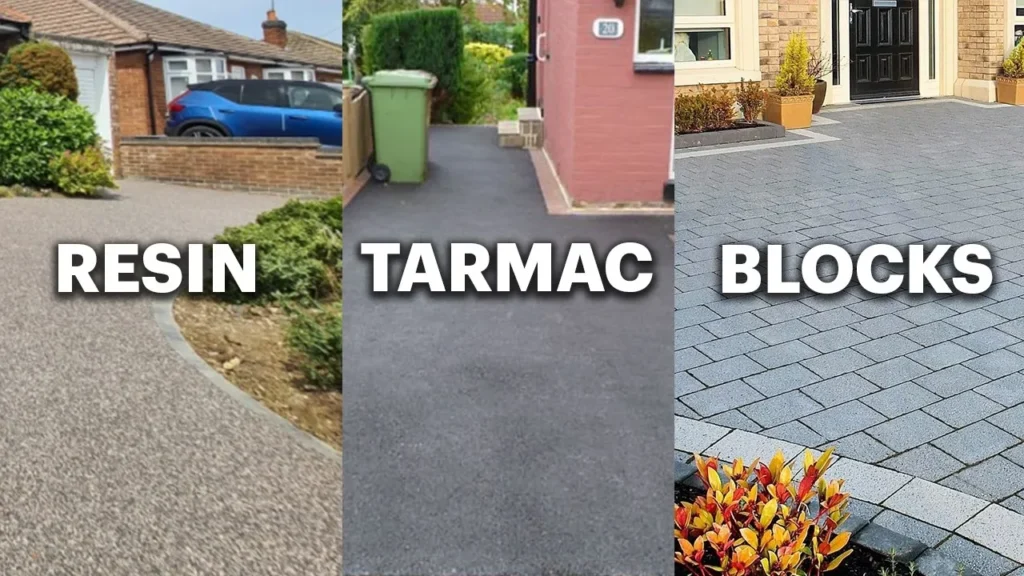
Block paving is one of the most weather-resilient driveway surfaces available in Durham. Concrete blocks perform well across all conditions, clay blocks offer superior fade resistance in strong sun, and permeable block paving handles heavy rainfall best by draining water through the surface rather than off it. For Durham’s mixed North East climate, a 50–60mm concrete block on a proper sub-base is the most reliable all-round choice. Now let’s look at exactly why block paving stands up to Durham’s weather so well — and which type suits your specific conditions best.
Why Climate Matters for Block Paving Choices
At Driveways Durham, we’ve laid thousands of square metres of block paving across County Durham — and one thing we’ve learned is that Durham weather is not one weather. A driveway in Sherburn on a south-facing slope deals with very different conditions from a shaded one in Framwellgate Moor.
North East UK climate throws the full range at us: wet winters, hard frosts. Occasional snow, summer heatwaves, and the freeze-thaw cycles that punish weaker surfaces. Choosing the right block paving in Durham isn’t just about picking a colour you like — it’s about picking a system that’ll survive everything the sky throws at it for 20+ years.
How Block Paving Performs in Each Climate Condition
Block paving performs exceptionally across most climates due to its flexible interlocking structure. Rather than cracking under pressure individual blocks shift slightly to accommodate extreme temperature and ground changes. However, its behaviour heavily depends on environmental conditions and seasonal upkeep.
Heavy Rainfall — Block Paving’s Strong Suit
Durham averages around 650–700mm of rainfall a year, and it’s not evenly spread. A quality block paving system handles rain in one of two ways:
- Standard block paving: Relies on carefully set falls (gradients) to shed water into drains or soakaways
- Permeable block paving: Lets rainwater drain straight through the wider joints filled with permeable jointing aggregate
For homes in flood-prone areas of Durham, permeable block paving is the smarter choice. It reduces surface water runoff, ticks the SUDS (Sustainable Drainage Systems) box, and usually removes the need for planning permission. We installed a permeable block drive in Belmont for a family whose old concrete drive used to flood their front path. Two winters in, they’ve had zero standing water — the surface just soaks it up and away.
Frost and Freeze-Thaw Cycles
This is where cheap materials fail, and quality shines. Water gets into tiny surface pores, freezes overnight, expands, and cracks the material. It’s the biggest single killer of poorly made outdoor surfaces in the North East. Block paving handles freeze-thaw brilliantly for one simple reason: it flexes. The interlocking blocks absorb small ground movement without cracking, unlike a solid concrete slab. And when one block does eventually chip, you lift it out and replace it — no full resurfacing.
Best for frost resistance:
- Frost-graded concrete blocks (rated to F2 standard or higher)
- Clay pavers, which are kiln-fired and virtually non-porous
- Proper edge restraints to stop lateral movement
Snow and Ice
Snow isn’t a huge issue on block paving — it clears easily, and the textured surface of most block types actually offers decent grip. Salt or grit is fine on quality blocks, though we’d advise avoiding harsh de-icing chemicals repeatedly on light-coloured blocks, as some can cause staining over time.
Summer Heat and UV
North East summers don’t get tropical, but a good few days of strong sun can fade cheaper pigmented concrete blocks noticeably over the years. Here’s the honest breakdown:
- Clay blocks: natural fired colour throughout — virtually no fading
- High-quality concrete blocks: modern UV-stable pigments hold up well
- Budget concrete blocks: can fade noticeably within 5–10 years
If UV fading is a concern (south-facing drives, especially), it’s worth paying a little more for either clay or premium concrete blocks.
Wind and Airborne Debris
Not a serious issue for block paving — but exposed rural sites can lose jointing sand from the joints over time. A simple re-sand every 3–5 years sorts it.
Which Type of Block Paving Suits Durham Best?
| Climate Condition | Best Block Paving Type |
|---|---|
| Heavy rainfall / flood risk | Permeable block paving |
| Frequent frost / freeze-thaw | Frost-graded concrete or clay blocks |
| Strong sun / south-facing | Clay blocks or premium UV-stable concrete |
| Snow-prone locations | Textured concrete blocks |
| Mixed conditions (most Durham homes) | 50–60mm concrete blocks on permeable sub-base |
| Commercial or heavy traffic | 80mm concrete blocks with reinforced sub-base |
The Foundation Matters More Than the Blocks
Here’s something most homeowners don’t realise: even the finest blocks will fail on a poor foundation. In our experience, the sub-base is what actually determines whether a block paving driveway survives Durham’s climate for 20 years or two.
For a proper Durham block paving install, we recommend:
- Minimum 150mm MOT Type 1 sub-base for residential drives
- 200mm+ sub-base for heavier vehicles or clay-heavy ground
- Full compaction of every layer
- Weed-suppressant membrane below the sub-base
- Concrete edge haunching to lock the outer blocks in place
Skip any of these, and you’ll pay for it in three or four winters when the surface starts sinking, tipping, or losing blocks.
Key Facts About Block Paving in Durham
| Fact | Detail |
|---|---|
| Typical lifespan | 20–30 years with proper maintenance |
| Ideal block thickness (residential) | 50–60mm |
| Frost rating to look for | F2 or higher |
| Rainfall handled by permeable systems | Up to 4,000mm per hour |
| Recommended sub-base | 150mm MOT Type 1 minimum |
| Reseal frequency | Every 3–5 years (optional) |
| Colour retention (clay blocks) | Effectively permanent |
| Repair method | Individual block replacement |
What Poor Climate Choices Look Like
We were called out to a property in Consett last spring where the owners had installed budget block paving four years earlier. After four Durham winters, the drive showed:
- Sinking near the entry point (undercompacted sub-base)
- Faded colour in south-facing sections (cheap pigment)
- Loose blocks along the edges (no proper haunching)
- Standing water in low spots (poorly set falls)
The whole drive had to come up. That’s what happens when the wrong system meets Durham’s climate — and it’s exactly why we always tell homeowners: pay for the foundation and the right blocks the first time.
Conclsion
Block paving in Durham is one of the most climate-resilient driveway options available — handling rain, frost, snow, and sun better than most alternatives, provided you choose the right block type and lay it on a proper foundation. Permeable systems are the smartest choice for rain-heavy areas, clay blocks are best for strong sun, and frost-rated concrete blocks suit the vast majority of Durham homes. At Driveways Durham, we don’t just install block paving — we specify it for the exact conditions your property faces. Wet, exposed, south-facing, shaded, sloped, or flat — every drive gets a system built to survive whatever the Northeast throws at it.
Frequently Asked Questions
Is block paving good for wet weather in Durham?
Yes — especially permeable block paving, which lets rainwater drain straight through. Standard block paving also handles rain well when correctly graded for drainage.
Does block paving crack in frost?
Quality frost-rated blocks (F2 or higher) resist freeze-thaw damage. The interlocking design also flexes with ground movement, unlike solid concrete which cracks.
Which is better for Durham weather — clay or concrete blocks?
Both perform well. Clay wins on colour retention and porosity resistance; concrete offers wider design choice and typically lower cost. For most Durham homes, quality concrete blocks are the practical choice.
Does block paving get slippery in winter?
Most textured block finishes offer good grip. Smoother blocks can get slippery when wet or icy, so we recommend textured or tumbled finishes for driveways.
How long does block paving last in the North East climate?
With correct installation and basic maintenance, 20–30 years is realistic. Poorly installed drives can fail in as little as 3–5 years — which is why installer choice matters as much as material choice. You can learn more in our related guide on block paving driveways in Durham.
Do I need planning permission for block paving in Durham?
Not usually — provided the surface is permeable or drains to a permeable area. Check Durham County Council for the latest guidance.


