
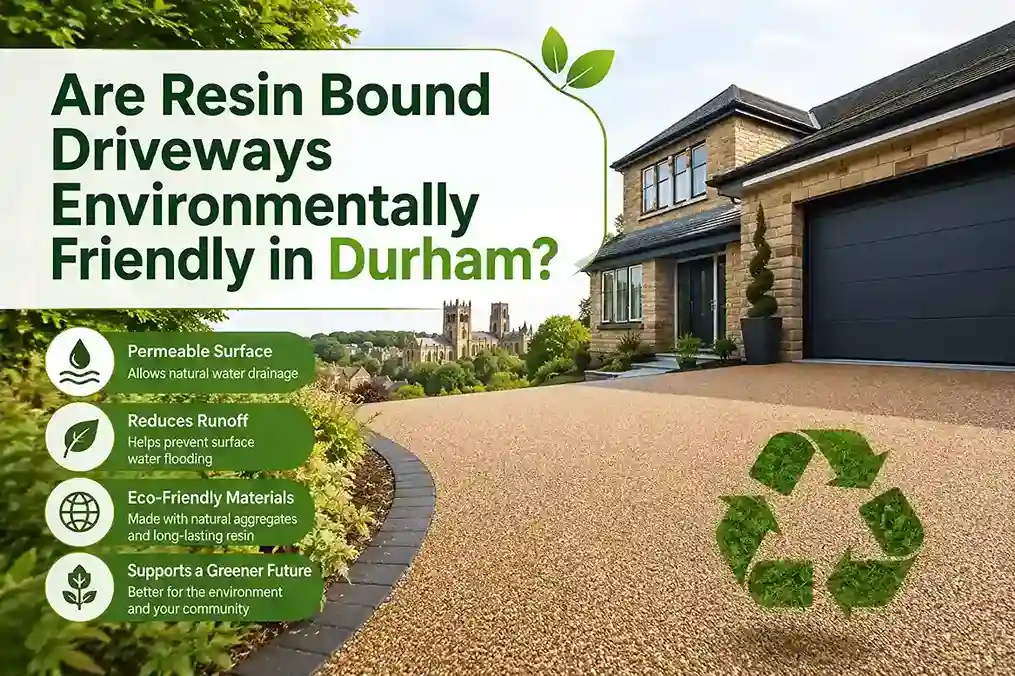
Walk down any street in Durham after a heavy downpour and you’ll notice something. Some driveways have water sheeting off them straight onto the road and down the drains, while others seem to just… soak it up. That difference matters far more than most homeowners realise — and it’s right at the heart of one question we’re asked more and more at Driveways Durham.
It’s a brilliant question to be asking. With wetter winters, tighter drainage rules, and a genuine push toward greener home choices, the surface you lay outside your front door isn’t just about looks anymore. So let’s dig into whether resin bound driveways in Durham really earn their eco-friendly reputation — or whether it’s just clever marketing.
What Exactly Is a Resin Bound Driveway?
Before we get to the green credentials, a quick explanation — because there’s a lot of confusion out there. A resin bound surface is made by mixing natural aggregate (small stones) with a clear resin binder, then trowelling it onto a prepared base to create a smooth, seamless finish. The key word is bound — every stone is locked in place, so there’s no loose gravel migrating onto your lawn or rattling around in your tyres. Crucially, when it’s laid properly, the finished surface is fully permeable. Water passes straight through it rather than running off. And that single property is where the environmental story really begins.
So, are resin-bound driveways environmentally friendly?
The short answer: yes — genuinely, and in several meaningful ways. Here’s why.
1. They Help Manage Surface Water and Reduce Flooding
This is a big one for the North East. Durham gets plenty of rain, and as more gardens are paved with non-permeable surfaces, that water floods straight into the drains. A permeable resin bound driveway in Durham lets rainwater soak naturally through the surface into the ground below — the principle behind SUDS (Sustainable Drainage Systems). This is exactly what makes them driveways suitable for weather conditions like ours, where heavy, frequent rainfall is the norm. We laid a resin drive in Bowburn for a couple whose old concrete drive flooded their garage every winter.
2. No Planning Permission Needed (When Done Right)
Here’s a practical bonus that ties straight into the eco benefit. Under UK rules introduced in 2008, you don’t need planning permission to pave your front garden as long as the surface is permeable (or drains to a permeable area). Because a properly laid resin bound surface ticks that box, most installations sail through without any council application. That’s not just convenient — it reflects the fact that the government actively encourages permeable surfacing for environmental reasons.
3. They Often Use Recycled and Natural Aggregates
The stone in a resin bound driveway can include recycled aggregates — crushed materials given a second life rather than sent to landfill — alongside natural stone like marble and granite. Choosing a blend with recycled content shrinks the environmental footprint of your driveway before it’s even laid.
4. Long Lifespan = Less Waste
A well-installed resin bound driveway should last 15–25 years with minimal upkeep. Compare that to surfaces that need patching, resurfacing, or full replacement every decade, and the maths is simple: the longer a surface lasts, the less material and energy gets consumed replacing it. Durability is sustainability.
5. Low Maintenance Means Fewer Chemicals
Because resin bound surfaces are weed-resistant and don’t need sand re-sealing like block paving, you’ll reach for far fewer weedkillers and cleaning chemicals over the years. A quick occasional jet wash is usually all it takes — better for your local soil and watercourses.
An Honest Look at the Other Side
We believe trust is built on honesty, so let’s not pretend resin is flawless.
- The resin itself is a petrochemical product. While the permeability and longevity offer real environmental gains, the binder isn’t a “natural” material, and manufacturing it has a footprint.
- Permeability depends entirely on correct installation. A resin surface laid over a solid, non-porous base loses its drainage benefit completely. This is exactly why a proper open-graded permeable sub-base matters — and why DIY or budget jobs so often fail the eco test.
- It’s not the cheapest option upfront. Though the long lifespan usually balances this out over time.
Resin bound driveways are environmentally friendly when they’re installed correctly by people who understand permeable construction. The eco benefit is real, but it isn’t automatic.
How Resin Compares to Other Driveway Surfaces
If sustainability is your priority, here’s the quick picture:
- Resin bound: Permeable, long-lasting, low-maintenance. Strong eco choice.
- Block paving: Can be permeable with the right blocks and jointing, and individual blocks are easily replaced. A solid option too (see our block paving installation).
- Concrete: Typically non-permeable, contributes to runoff, and often needs planning permission.
- Tarmac: Usually non-permeable unless specialist porous tarmac is used.
For many Durham homeowners weighing looks, drainage, and green credentials together, resin comes out near the top.
The Bottom Line
So, are resin bound driveways environmentally friendly in Durham? Done properly, absolutely. Their permeability tackles flooding and supports natural drainage, they last for decades, they use recycled materials, and they need very little chemical maintenance. The honest caveat is that all of this depends on a correct, permeable installation, which is exactly where choosing the right installer makes the difference.
Make the Greener Choice with Driveways Durham
At Driveways Durham, resin bound surfacing is one of our specialities — and we install it the way it’s meant to be done: with a proper permeable base, quality aggregates, and a finish built to last and to drain. If you want a driveway that looks stunning and does right by the environment, we’d love to help you get it right.
Frequently Asked Questions (FAQs)
Are resin bound driveways permeable?
Yes — when correctly installed over a suitable open-graded sub-base, resin bound surfaces are fully permeable, allowing water to drain straight through.
Do resin bound driveways need planning permission in Durham?
Usually no, because permeable surfaces are exempt under UK paving rules. You can check the current guidance on the Durham County Council website.
Are resin driveways eco-friendly compared to concrete?
In drainage terms, considerably so. Resin allows natural water infiltration, reduces runoff and flood risk, and often incorporates recycled aggregates — none of which standard concrete offers.
How long do resin bound driveways last?
With proper installation and basic care, expect 15–25 years. Their longevity is part of what makes them a sustainable choice.
Do resin driveways really help with flooding?
Yes. By letting rainwater soak through rather than run off, they ease pressure on local drains during heavy rainfall — a real benefit in our wet North East climate.


