
If you’ve ever seen a resin garden path that looks perfect at first but starts to sink or crack within a year, the problem usually isn’t the surface. It’s what’s underneath. The base is the most important part of any resin installation, yet it’s the step many homeowners overlook.
For anyone planning a resin garden path in Durham, getting the base right is what determines whether your path lasts five years or twenty. With Durham’s mix of clay-heavy soils and frequent rainfall, poor groundwork can quickly lead to drainage issues, uneven surfaces and costly repairs.
Why the Base Matters More Than the Surface
It’s easy to focus on the visual side of a resin path. The colour, the finish and how it complements your garden. But structurally, the base does all the heavy lifting.
A proper base ensures:
• long-term stability
• effective drainage
• resistance to cracking
• even weight distribution
Without it, even the highest quality resin will fail over time. According to UK construction standards, most surface failures are linked to poor sub-base preparation rather than material defects. That’s why professional installers prioritise groundwork before anything else.
What Base Is Needed for a Resin Garden Path?
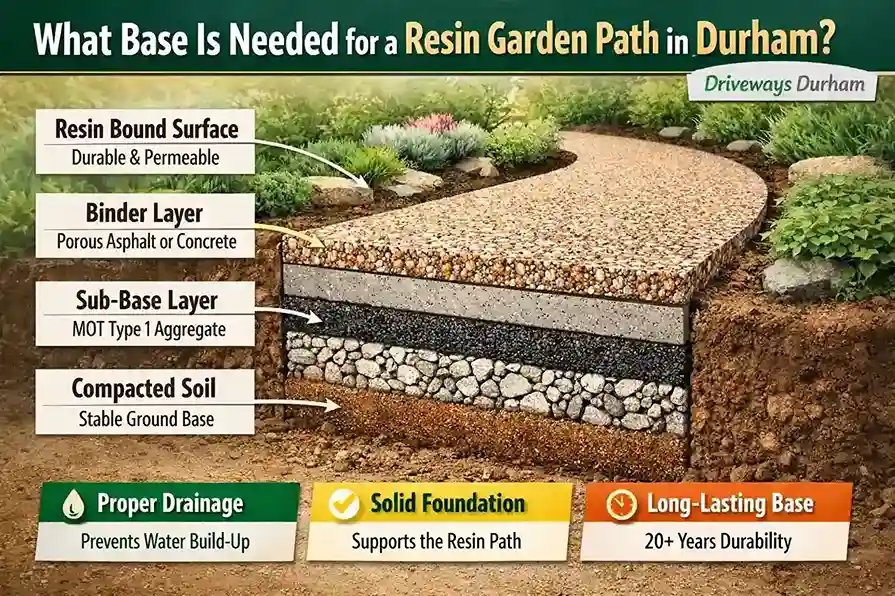
For a durable resin garden path in Durham, the base typically consists of two main layers:
1. Sub-base Layer (Foundation)
This is the structural layer that supports the entire path.
The most commonly used material is MOT Type 1 aggregate, which is a mix of crushed stone that compacts tightly to form a stable base.
Key features:
• excellent load-bearing strength
• good drainage properties
• long-lasting stability
This layer is usually installed at a depth of 100–150mm, depending on ground conditions.
2. Binder/Base Layer (Surface Support)
On top of the sub-base, a binder layer is added. This is usually:
• porous asphalt (best option)
• or concrete (less flexible but still used)
Porous asphalt is preferred because it allows water to pass through, supporting the permeable nature of resin surfaces. This layer provides a smooth, even surface for the resin to bond to.
Why Permeable Bases Are Important in Durham
Durham’s climate includes regular rainfall throughout the year. This makes drainage one of the most important factors when installing any outdoor surface. A resin garden path is designed to be permeable, meaning water drains through it rather than sitting on top. But this only works if the base underneath also allows water to pass through.
If a non-permeable base is used:
• water can become trapped
• Frost damage may occur in winter
• surface cracking becomes more likely
This is why professionals, including Driveways Durham, recommend permeable base systems whenever possible.
Step-by-Step Base Preparation Process
Understanding the process helps you spot quality workmanship and avoid shortcuts.
Step 1: Excavation: The area is dug out to the correct depth, usually around 150–250mm, depending on the soil. All loose soil, roots and debris are removed.
Step 2: Ground Levelling and Compaction: The ground is levelled and compacted to create a stable starting point. Soft or clay-heavy areas may need additional reinforcement.
Step 3: Installing the Sub-base: MOT Type 1 is laid in layers and compacted using specialist equipment. This step is repeated until the required depth and stability are achieved.
Step 4: Adding the Binder Layer: A porous asphalt or concrete layer is installed on top of the sub-base.: This creates a smooth, strong surface for the resin.
Step 5: Final Resin Application: Only after the base is complete is the resin-bound surface applied. This ensures the finish is both durable and visually consistent
Common Mistakes to Avoid
Many problems with resin paths come from shortcuts during the base stage.
1. Skipping Proper Excavation: Installing on top of existing soil without digging deep enough leads to movement and sinking.
2. Using Poor Quality Sub-base Material: Low-grade aggregates don’t compact properly and weaken the structure.
3. Ignoring Drainage: Without proper drainage, water damage becomes inevitable.
4. Laying Resin on an Unstable Base: Even slight movement underneath can cause cracking in the surface. These issues are often more expensive to fix than doing the job correctly from the start.
Real Example from a Durham Garden
A homeowner in Durham recently contacted Driveways Durham after their resin path began to dip and crack within two years. The original installer had skipped proper sub-base preparation and laid the resin directly over compacted soil.
The solution involved removing the entire surface, excavating to the correct depth and rebuilding the base using MOT Type 1 and porous asphalt. Once the new resin layer was applied, the path not only looked better but performed properly, even during heavy rain.
How Long Does a Proper Base Last?
When installed correctly, the base of a resin garden path can last 20+ years without major issues. The resin surface itself may need minor maintenance over time, but the base should remain stable if constructed properly. This is why investing in professional installation pays off in the long run.
Final Thoughts
So, what base is needed for a resin garden path in Durham? The answer is simple: a strong, well-prepared foundation made of a compacted sub-base and a permeable binder layer. While the resin surface gets all the attention, it’s the base that determines whether your path stands the test of time. If you want a path that stays level, drains properly and looks good for years, investing in proper groundwork is essential. Experienced professionals like Driveways Durham understand local conditions and ensure every layer is built to last.
Frequently Asked Questions (FAQs)
What is the best base for a resin garden path in Durham?
The best base is a combination of a compacted MOT Type 1 sub-base and a porous asphalt layer. This provides strength, stability and proper drainage.
Can I lay a resin garden path directly on soil?
No, laying resin directly on soil will lead to sinking and cracking. A solid sub-base is essential for long-term durability.
How deep should the base be for a resin garden path?
Typically, the base should be around 150–250mm deep, depending on soil conditions and usage.
Is a permeable base necessary for the resin path?
Yes, a permeable base is recommended to allow water to drain through the surface and prevent pooling or frost damage.
Can existing concrete be used as a base for resin paths?
Yes, if the concrete is in good condition and free from cracks. It must also be properly cleaned and primed before applying resin.
What happens if the base is not prepared properly?
Poor base preparation can lead to cracks, uneven surfaces, drainage issues and early failure of the resin path.


