
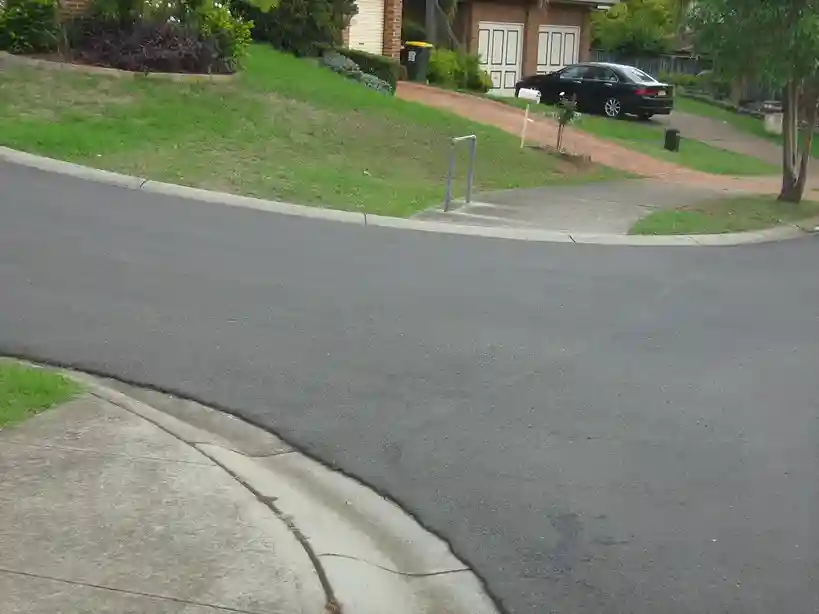
Most homeowners only look at their driveway when they’re reversing onto it. If it looks tidy, that’s usually the end of the thought. The problem is that safety issues rarely announce themselves loudly. They develop slowly. A small crack. A slight dip. Water that lingers a little longer after rain.
Driveway and kerb safety checks are not about being overly cautious. They’re about preventing small defects from becoming safety hazards, legal problems, or expensive repairs. In Durham, where rainfall is frequent, and many streets are tight and older, regular checks are even more important.
Why Driveway and Kerb Safety Checks Matter
Your driveway connects private property to public space. That connection carries responsibility. If your driveway causes water to run onto the pavement, damages a kerb, or creates a trip hazard, the issue no longer affects only you. It affects pedestrians, road users and, potentially, the local council. In Durham, oversight of highways and kerbs falls under the Durham County Council. Problems that impact the pavement or road can trigger enforcement or required remedial work.
Check 1: Surface Condition and Structural Stability
Start with the basics. Walk your driveway slowly and look closely.
- Are there cracks forming?
- Do certain areas feel uneven underfoot?
- Are blocks lifting or sinking?
Minor surface defects often signal deeper groundwork issues. Subsidence, poor compaction, or water saturation beneath the surface can gradually destabilise the driveway. In Durham’s clay-heavy soils, ground movement is common. If you notice dips developing near the house or close to the kerb line, it’s worth investigating early.
Check 2: Drainage and Water Flow
Drainage is where many safety problems begin. Under UK driveway drainage regulations, surface water must not discharge onto the public highway. After heavy rain, observe where water flows. It should remain within your property boundary.
Watch for:
- Water is pooling near the pavement
- Runoff crossing the footpath
- Persistent damp patches along kerbs
In winter, these same areas can freeze and become slip hazards. Even small drainage faults can create visible safety risks that attract complaints.
Check 3: Kerb Condition and Alignment
Kerbs are often ignored because they seem part of the street rather than the driveway. In reality, driveway access and kerb condition are closely linked.
Inspect the kerb stones outside your property. Look for:
- Cracks or broken edges
- Stones that have shifted out of line
- Gaps are forming between the kerb and the surface
Kerb installation safety is essential for both pedestrian protection and road stability. A damaged kerb can weaken pavement edges and increase the risk of trips. If your driveway includes a dropped kerb, ensure it remains level and properly supported. Sinking dropped kerbs are common where foundations were insufficient.
Check 4: Edge Support and Transitions
The transition between the driveway and the pavement should be smooth and stable. If edges crumble or blocks near the boundary become loose, vehicles entering and exiting the property may damage both the driveway and the pavement over time. Poor edge support is a common sign of incorrect driveway installation risks. It may not look dramatic at first, but repeated vehicle movement quickly worsens the issue.
Check 5: Signs of Movement or Subsidence
Look for hairline cracks widening over time. Check if doors or gates near the driveway are sticking, as ground movement can affect nearby structures. In Durham, seasonal moisture changes can accelerate subsidence in poorly prepared driveways. Early detection prevents widespread structural failure.
Check 6: Compliance with Planning and Access Rules
If your driveway was installed or altered in recent years, confirm it complies with UK driveway planning permission and drainage requirements.
Ask yourself:
- Was a dropped kerb approved?
- Does water remain within the property boundary?
- Were levels significantly altered during installation?
Non-compliant work can become a problem during property sales or if complaints arise.
Check 7: Pedestrian Safety Around the Driveway
Driveways are shared spaces. Even if you rarely walk across yours, others may.
Check for:
- Uneven paving near pedestrian routes
- Slippery moss build-up
- Loose edging stones
- Sharp height changes
Trip hazards often occur where driveways meet pavements. Regular cleaning and minor repairs reduce risk significantly.
How Often Should You Perform Safety Checks?
A full visual inspection twice a year is sensible. Once after winter and once after heavy summer rainfall is ideal.
Additional checks should be done:
- After severe storms
- If you notice drainage issues
- Before selling your property
Small issues identified early are usually inexpensive to fix.
What Happens If You Ignore Safety Checks?
Ignoring driveway and kerb safety checks rarely leads to immediate disaster. Instead, problems compound. Water damage spreads. Kerbs weaken. Surface movement increases. Eventually, repair costs rise sharply, or council involvement becomes unavoidable. At Driveways Durham, many assessments begin with homeowners who ignored minor warning signs for years. By the time they call, repairs are far more extensive than they needed to be.
Why Professional Inspections Add Value
While homeowners can conduct visual checks, professional inspections go deeper.
A professional can assess:
- Sub-base stability
- Drainage performance
- Kerb integrity
- Long-term structural risks
This is particularly important in Durham, where local soil and weather conditions accelerate wear.
Final Thoughts
Driveway and kerb safety checks are not about perfection. They are about awareness. A driveway is more than a parking space. It interacts with public pavements, drainage systems, and pedestrian routes. In Durham, where environmental and structural pressures are constant, regular inspections protect both property and public safety.
A few careful checks each year can prevent legal issues, reduce repair costs, and extend the life of your driveway significantly. If you’re unsure whether your driveway meets safety and compliance standards, contact Driveways Durham for a professional assessment. Early advice is always cheaper than late repairs.
Frequently Asked Questions (FAQs)
How often should I carry out driveway and kerb safety checks?
You should inspect your driveway and kerbs at least twice a year, ideally after winter and after heavy rainfall, to spot drainage or structural issues early.
What are the most common driveway safety problems?
Common issues include cracks, uneven surfaces, sinking areas, standing water and loose edging blocks, all of which can create trip or slip hazards.
Why is drainage important during driveway checks?
Poor drainage can cause water to run onto the pavement, creating slip risks and potentially breaching UK driveway drainage regulations.
How can I tell if my kerb is unsafe?
Look for cracked, loose or sunken kerb stones, uneven levels, or gaps forming near the driveway entrance. These can weaken pavement edges and create hazards.
Do driveway safety issues affect property value?
Yes. Visible defects, drainage problems or non-compliant work can delay property sales and lead to survey concerns or required repairs.
Who is responsible for driveway and kerb safety?
Homeowners are responsible for ensuring their driveway does not create hazards or damage to the public pavement or road.
When should I seek professional advice?
If you notice repeated water pooling, surface movement, kerb damage, or subsidence, it is best to seek a professional assessment before the problems worsen.


