
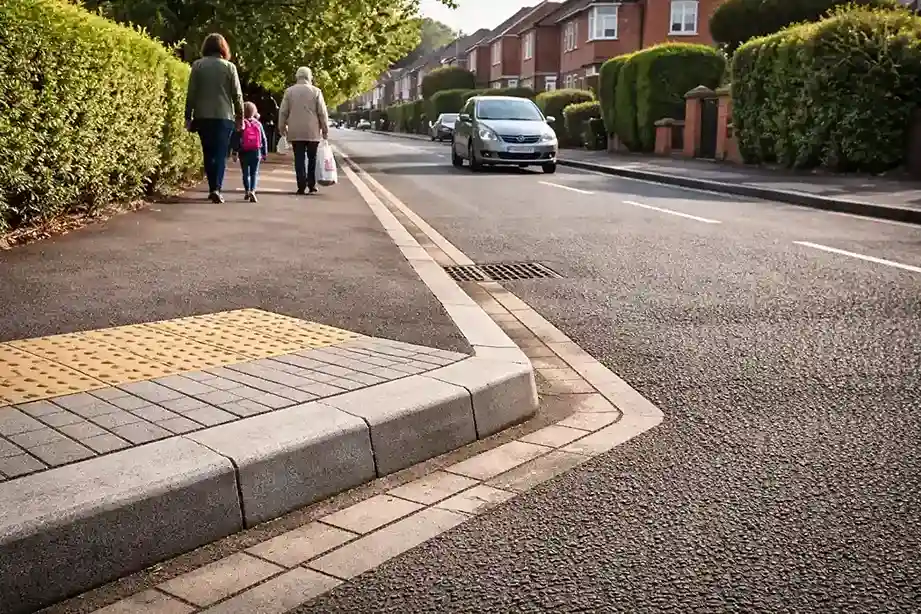
Kerbs are easy to overlook. Most people only notice them when something goes wrong. A cracked edge. A puddle that never drains. A pedestrian stumbling where pavement meets road. Yet kerbs quietly do some of the most important safety work on our streets.
In towns like Durham, where roads are often narrow, and pavements see heavy daily use, correct kerb installation is not cosmetic. It is a core part of road and pedestrian safety. When kerbs are installed properly, they guide movement, manage water, and reduce accidents. When they are not, the risks increase quickly.
Why Kerb Installation Safety Matters More Than People Think
Kerbs sit at the boundary between vehicles and pedestrians. That boundary needs to be clear, stable, and predictable. A properly installed kerb helps drivers understand where the road ends and the footpath begins. It gives pedestrians a defined space to walk. It also controls how water moves across the street surface.
When kerb installation safety is ignored, that boundary blurs. Vehicles mount pavements. Water runs where it should not. Trip hazards appear. Councils then step in because public safety is compromised.
How Kerbs Protect Pedestrians on Busy Streets
Pedestrian safety is one of the primary reasons kerbs exist. Kerbs create a physical separation between moving traffic and walking space. This separation reduces the chance of vehicles encroaching onto pavements, especially in tight residential streets or near junctions.
Correct kerb height and alignment also help pedestrians judge where it is safe to step down to the road. Poorly aligned or sunken kerbs increase the risk of trips and falls, particularly for older people or those with mobility issues. In areas with high foot traffic, small installation errors can lead to repeated accidents over time.
The Role of Kerbs in Road Safety
Kerbs do not just protect people on foot. They also improve road safety for drivers. Clear kerb lines help drivers position vehicles correctly and judge road width, especially at night or in poor weather. Kerbs also support road edges, preventing the gradual collapse of tarmac into the pavement area. When kerbs fail structurally, road edges break down faster. This leads to potholes, uneven surfaces, and unpredictable driving conditions. What starts as a kerb issue quickly becomes a wider road safety problem.
Drainage Control and Slip Hazard Prevention
One of the most overlooked safety roles of kerbs is drainage control. Kerbs are designed to direct surface water along predictable channels toward drainage points. When installed correctly, they prevent water from flowing onto pavements and pooling where people walk.
Poor kerb alignment or incorrect gradients can force water onto the footpath. In wet conditions, this creates slip hazards. In winter, it creates ice. Both scenarios are treated seriously by councils because the risk is immediate and visible. This is why kerb installation safety is closely linked to UK driveway drainage regulations and wider surface water management rules.
Dropped Kerbs and Accessibility Safety
Dropped kerbs are essential for accessibility, but they also require precise installation. They allow safe crossing points for wheelchair users, pushchairs, and cyclists. However, if dropped kerbs are installed incorrectly, they can create trip points, pooling water, or weak edges that fail under vehicle weight. Accessibility features must balance smooth transitions with structural strength. A dropped kerb that looks neat but lacks proper support will deteriorate quickly, creating safety risks rather than removing them.
Planning Permission and Compliance Factors
Kerb installations are part of the public highway, which means they are regulated. Any alteration to a kerb, including the installation of a dropped kerb for driveway access, requires approval. In Durham, this oversight is handled by Durham County Council. Compliance ensures kerbs meet safety, drainage, and durability standards. Installing or altering kerbs without permission can lead to enforcement action and required reinstatement, even if the work looks professionally finished.
Risks of Incorrect Kerb Installation
Incorrect kerb installation creates risks that often develop slowly. Common problems include kerbs sinking due to weak foundations, cracking under repeated vehicle loading, and uneven levels that cause pedestrians to stumble. Drainage failures are also common, particularly where kerbs are not set to correct gradients. These issues rarely fix themselves. Over time, they worsen and attract attention from both the public and the council.
Real-World Safety Checks Homeowners Can Notice
You don’t need technical knowledge to spot potential kerb safety issues. Signs of concern include standing water along the pavement edge, cracked or loose kerb stones, uneven transitions between pavement and road, and repeated repairs in the same area. If these signs are present near a driveway or access point, the kerb installation may not be performing safely.
Why Professional Kerb Installation Makes a Difference
Kerb installation safety depends on more than surface appearance. Professionals assess load requirements, ground conditions, drainage flow, and pedestrian use before installation begins. They use approved materials and methods that meet highway authority standards. Driveways Durham: We regularly see kerbs that fail early because installation focuses on speed rather than safety. In almost every case, the underlying issue is inadequate preparation or ignored regulations. Professional installation reduces long-term risk and avoids repeat work.
Local Context: Kerb Safety in Durham
Durham’s street layout adds extra pressure to kerb safety. Many residential roads are narrow, with limited space between parked cars and footpaths. Pavements are often older and less forgiving of movement. Rainfall is frequent, increasing drainage demands. These conditions mean kerb installation errors show up faster and create greater safety risks than in wider, newer developments.
How Kerb Safety Protects Property Owners
Kerb safety is not just a public issue. It protects homeowners, too. Unsafe kerbs can expose property owners to liability if an accident occurs outside their property due to poor installation. Non-compliant kerb work can also delay property sales or trigger costly remedial work during surveys. Compliance and proper installation reduce these risks and protect long-term property value.
Final Thoughts
Kerbs may seem like small components of street design, but their impact on safety is significant. Proper kerb installation improves pedestrian protection, supports road structure, manages drainage, and reduces accident risk. In places like Durham, where streets are busy and conditions demanding, kerb installation safety is not optional. It is essential infrastructure.
Whether for driveways, dropped kerbs, or general pavement work, investing in compliant, professional kerb installation protects everyone who uses the street every day. If you are planning kerb or driveway work in Durham and want to ensure it meets safety and compliance standards, speak to Driveways Durham. We focus on long-term safety, not short-term shortcuts.
Frequently Asked Questions (FAQs)
How do kerb installations improve pedestrian safety?
Kerb installations create a clear physical separation between vehicles and footpaths. This reduces the risk of vehicles mounting pavements and helps pedestrians move safely, especially in busy or narrow streets.
Why is the correct kerb height important for safety?
Correct kerb height helps pedestrians judge where to step down safely and prevents trip hazards. Kerbs that are too high, too low, or uneven increase the risk of falls, particularly for elderly people and those with mobility issues.
How do kerbs help with road safety?
Kerbs define the edge of the road, helping drivers position vehicles correctly and preventing road surfaces from breaking down. They also protect pavements from vehicle damage, which reduces long-term road hazards.
What safety risks come from poorly installed kerbs?
Poorly installed kerbs can crack, sink, or shift over time. This can create trip hazards, allow vehicles to encroach onto pavements, and cause drainage problems that lead to slippery surfaces or ice in winter.
Do dropped kerbs affect pedestrian safety?
Yes. Dropped kerbs must be installed correctly to provide safe access for wheelchairs, pushchairs, and cyclists. Incorrect installation can cause uneven surfaces, pooling water, or weak edges that become dangerous over time.
Are kerb installations regulated in the UK?
Yes. Kerb installations are part of the public highway and must meet safety and construction standards. Approval is required for alterations such as dropped kerbs, and work is overseen by local councils.
How can homeowners tell if a kerb is unsafe?
Signs of an unsafe kerb include cracks, loose or sunken stones, standing water along the pavement edge, and uneven transitions between the road and footpath. These issues should be assessed by a professional.


