
Most homeowners only think about safety when something goes wrong. A cracked kerb. A pedestrian trip. A letter from the council. By that point, the damage is already done. Dropped kerb installation safety in Durham is not about ticking boxes or slowing the job down. It is about managing risk on a public highway, protecting pedestrians, vehicles, and the homeowner from problems that can surface years later. When professionals handle the work properly, the dropped kerb becomes invisible. When they don’t, it becomes a liability.
Why Dropped Kerb Safety Is a Bigger Issue Than It Looks
A dropped kerb is not just a driveway feature. It alters the public pavement, affects vehicle access, and changes how people move along the street. In Durham, pavements are often narrow, streets are busy, and weather conditions add extra stress to poor workmanship. That is why safety is built into every stage of professional dropped kerb installation, not added at the end. Professionals approach safety as a system, not a single task.
Dropped Kerb Planning Permission Comes Before Any Safety Work
Dropped kerb planning permission is required because it allows the council to assess whether the proposed access is safe in the first place. This includes checking visibility for drivers, proximity to junctions, pavement width, drainage impact, and pedestrian access. In Durham, the highway authority is the Durham County Council. Installing a dropped kerb without approval often results in unsafe positioning, which accelerates wear and increases the risk of enforcement action or removal. Professionals design the kerb to pass approval the first time, not to fix problems later.
Dropped Kerb Standards UK: The Safety Framework
Dropped Kerb Standards UK exist for a reason. They define minimum requirements for load-bearing strength, gradients, drainage, and structural stability. These standards ensure safety during dropped kerb installation in Durham by making sure kerbs can handle repeated vehicle loading, seasonal weather changes, and constant pedestrian use. When they are followed, dropped kerbs perform reliably for decades. When they are ignored, cracking, sinking, and edge failure become common. Councils judge kerbs against these standards, not surface appearance. A neat finish never compensates for structural weakness.
Safe Dropped Kerb Installation Starts Below Ground
One of the most common safety failures happens when homeowners never see it. The sub-base beneath the kerb must be deep, well-compacted, and suitable for Durham’s ground conditions, which are often clay-heavy. Poor base preparation leads to movement, water retention, and long-term instability. Professional dropped kerb installation in Durham accounts for soil type, drainage paths, and vehicle weight from the outset. Shortcuts below ground are the main reason kerbs fail early and become safety risks.
Traffic Management: The Part Everyone Notices
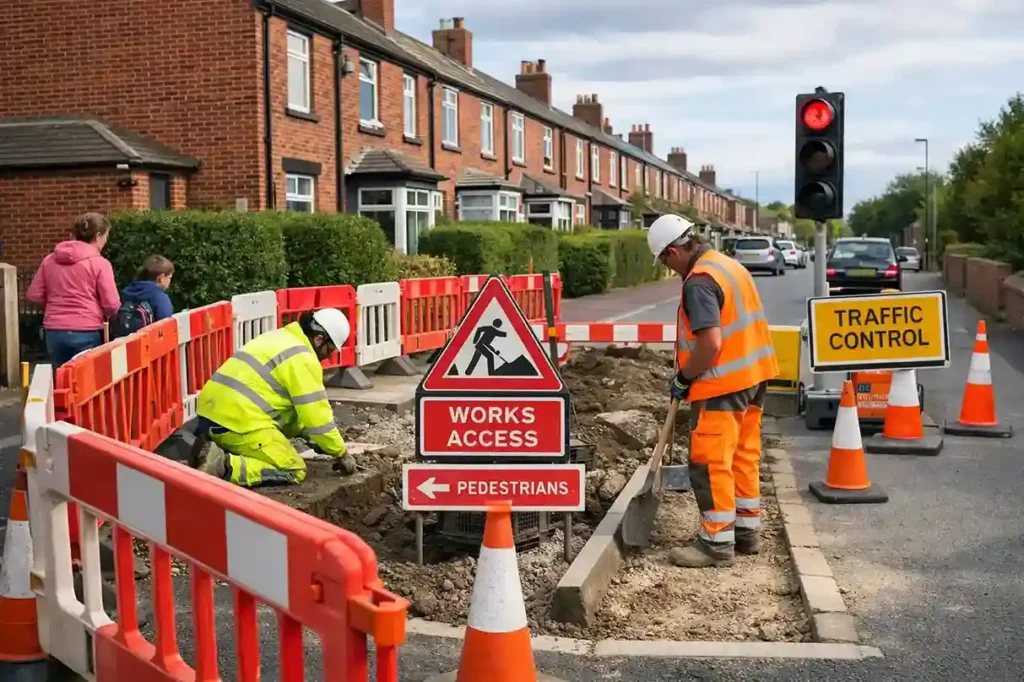
This is where professional sites look busy, even when progress appears slow. Traffic management protects pedestrians, drivers, and the work crew. It includes cones, signage, barriers, and controlled pedestrian routes. These measures are not optional extras. They are essential when working next to live traffic and public walkways. Professionals plan traffic management as part of the job, not as an afterthought. Skipping it increases accident risk and exposes the homeowner to liability.
Protecting Pedestrians and Accessibility
Dropped kerb installation safety in Durham must account for more than vehicles. Professionals ensure pavements remain passable for wheelchair users, pushchairs, and people with limited mobility. Gradients are controlled, transitions are smooth, and remaining footway widths meet accessibility expectations. Poorly installed kerbs often force pedestrians into the road or create trip hazards. These are among the most common reasons councils intervene after installation.
Managing Underground Services Safely
Durham pavements often contain gas, water, electricity, and fibre services. Damaging any of these is a serious safety incident. Professional installers check service drawings and use careful excavation methods, including hand-digging where required. This slows the job slightly but prevents dangerous and costly mistakes. Cutting into unknown services is not just a repair issue. It is a safety failure with legal consequences.
How Professional Installation Protects Dropped Kerb Lifespan
A safely installed dropped kerb is structurally sound, drains correctly, and resists movement. This directly affects how long it lasts. In Durham, professionally installed kerbs typically last between 20 and 30 years. Kerbs that fail within a decade usually show the same pattern. Poor base preparation, rushed curing, or non-compliance with standards. Safety shortcuts always shorten lifespan.
Real-World Problems Professionals Prevent
Kerbs are installed too close to junctions that suffer repeated impact damage. Pavements that sink because drainage was never considered. Kerbs that crack because concrete was reopened too early. At Driveways Durham, we often get called after these problems appear. By that point, repairs are more expensive than doing it properly the first time.
Dropped Kerb Benefits When Safety Is Done Properly
A compliant dropped kerb improves access, protects pedestrians, avoids enforcement issues, and supports property value. It also reduces the risk of disputes during surveys or home sales, where non-approved or unsafe work is increasingly flagged.
Final Thoughts
Dropped kerb installation safety in Durham is not about slowing work down or adding unnecessary steps. It is about understanding that this work alters the public highway and carries responsibility. Professional installers think beyond completion day. They plan for weather, traffic, pedestrians, and long-term use. That mindset is what keeps dropped kerbs safe, compliant, and problem-free for decades.
If you are planning a dropped kerb, the safest decision you can make is choosing professionals who treat safety as the foundation of the job, not a box to tick. If you want clear advice on safe, compliant dropped kerb installation in Durham, speak to Driveways Durham before work begins. We focus on standards, safety, and long-term performance, not shortcuts.
Frequently Asked Questions (FAQs)
How do professionals ensure dropped kerb installation safety in Durham?
Professionals ensure safety by following UK dropped kerb standards, securing council approval, managing traffic and pedestrians, and preparing a stable sub-base before any concrete is laid.
Is planning permission required for safe dropped kerb installation in Durham?
Yes. Planning permission is required because the work affects the public highway. Approval from Durham County Council ensures the kerb is positioned safely with proper visibility, drainage, and pedestrian access.
What safety standards apply to dropped kerb installation in the UK?
Dropped kerb installation must follow UK highway standards covering load-bearing strength, gradients, drainage, concrete quality, and pavement stability. These standards exist to prevent cracking, sinking, and trip hazards.
What are the risks of unsafe dropped kerb installation?
Unsafe installation can lead to pavement collapse, vehicle damage, pedestrian injuries, water pooling, and council enforcement action. In some cases, homeowners may be required to remove and reinstate non-compliant work at their own cost.
Does professional installation affect dropped kerb lifespan?
Yes. A safely and professionally installed dropped kerb in Durham typically lasts 20 to 30 years. Poor safety practices almost always shorten lifespan due to movement, cracking, or drainage failure.


